On April 21, 2026, in a meeting room in New Delhi, three Korean executives, one Indian fund manager, the Indian Commerce Minister, and the Korean Minister of Trade sat down together and signed off on the largest India-focused capital pool ever raised by an Asian technology-led platform. INR 6,000 crore. Four investment themes. Two governments. One message, delivered at the scale at which such messages actually land.

KRAFTON, the Korean publisher most Indian readers know as the company behind BGMI, announced alongside Naver Corporation and Mirae Asset Venture Investments that the Unicorn Growth Fund was now formally live, managed on the ground by MAVI’s India team, and ready to start writing cheques into Indian technology platforms, consumer businesses, AI and software companies, and deep tech. The official line from the announcement, delivered by KRAFTON Global CEO CH Kim, was clear: India is no longer a consumption market in the KRAFTON worldview. India is a creator economy, a development hub, and a partner market at the same level Korea and Japan have historically operated at in Asia.
For a company most Indian gamers think of as the BGMI company, this is a significant sentence. It is also the sentence KRAFTON has been working toward for nearly a decade.
The Ten-Year Build
Here is what most casual observers miss about KRAFTON in India.
The company has been operating in this country, in some form, since 2018. It launched PUBG Mobile, watched the title become a generation-defining cultural event, navigated the 2020 ban, rebuilt the title as BGMI with an India-specific operational model, navigated a second suspension in 2022, came back online in 2023, and has since run an uninterrupted competitive and commercial operation that few foreign gaming publishers have matched anywhere in Asia. Through all of that, KRAFTON kept investing, kept localising, and kept expanding beyond the game itself.
The numbers tell the story. KRAFTON has invested in NODWIN Gaming, Loco, Pratilipi, and Kuku FM, each of which has become a category leader in its own segment. NODWIN is the dominant tournament organiser in South Asian esports. Loco is the country’s largest dedicated gaming live-streaming platform. Pratilipi is the world’s largest multi-language storytelling platform. Kuku FM has become the default audio storytelling service for Indian-language content. None of these are gaming investments in the narrow sense. They are infrastructure bets on the broader Indian internet economy.
Beyond that portfolio, KRAFTON India launched the Krafton India Gaming Incubator to fund and mentor Indian game development studios, something no other foreign gaming publisher of comparable scale has done in this country. The company ran a 128-college nationwide campus tour integrating collegiate esports into 130+ institutions across India. It runs BGIS 2026, which remains the single largest mobile esports tournament in the country by viewership. It runs BMPS 2026, which feeds directly into the PUBG Mobile World Cup at Esports World Cup 2026 in Riyadh.
That is not a publisher operation. That is an ecosystem operation. KRAFTON stopped being just a game publisher in India years ago. The Unicorn Growth Fund is the formal admission of what has been true in practice since at least 2021.
Why This Announcement Is Different
Several foreign technology companies have committed large sums to India over the last decade. Google, Meta, Microsoft, Amazon have all run multi-billion-dollar India programmes through cloud, consumer, and enterprise products. What is different about the Unicorn Growth Fund is the specific combination of who is doing it, what they are funding, and how the capital is structured.
This is not a CSR initiative. It is not a strategic investment arm buying stakes in individual companies. It is a formal fund, with a named fund manager, with a defined thematic mandate, and with a capital pool size large enough to meaningfully shape the growth-stage venture environment in India for the next five years. At INR 6,000 crore (roughly $720 million at current exchange rates), it sits comfortably alongside the largest dedicated India venture funds run by domestic managers. It outsizes every India-focused fund ever raised by an Asian tech-led platform, which is the detail the press release is proud of and which is also the detail that matters strategically.
Look at the geographic logic. Japanese capital has been present in Indian venture for two decades, largely through SoftBank, which operates globally and does not frame itself as a Japan-India axis. American venture capital dominates the top of the Indian cap table. Middle Eastern sovereign money has arrived in the last three years, with mixed results and significant volatility. Chinese capital, for reasons everyone understands, has been effectively shut out since 2020.
Korean capital, at this scale, is new. KRAFTON and Naver together represent two of the largest technology companies in South Korea. Naver operates the country’s dominant search engine, the largest webtoon platform in Asia, a sprawling commerce and fintech business, and a rapidly-expanding B2B AI and cloud operation. Naver Corporation is, functionally, the Google of Korea, with some of its own distinct businesses that Google does not operate. Between KRAFTON and Naver, the Unicorn Growth Fund brings to Indian founders a technology stack, consumer reach, and platform expertise that no single American VC and no single Japanese investor individually carries.
That is the part of this story that deserves more attention than the press cycle is likely to give it.
The Four Themes, Read Carefully
The fund’s mandate covers Technology Platforms, Consumer Discretionary, AI & Software, and Deep Tech. These are the four themes listed in the official release, and they are worth reading carefully because the choice says something about how KRAFTON and Naver are seeing India.
Technology Platforms means consumer internet, digital marketplaces, and next-generation platform infrastructure. That is the territory KRAFTON already knows through its existing investments in Pratilipi, Kuku FM, and Loco. Consumer Discretionary covers digitally-native brands and new-age consumer businesses serving India’s rising middle class. That is a category Indian domestic VCs have been active in for a decade, and it is a category where Korean expertise in content, commerce, and consumer branding (Naver’s core strength) could genuinely add value beyond the cheque.
AI and Software is the broader category of generative AI, applied AI, enterprise SaaS, and developer tooling. This is the category where Indian founder talent is globally competitive right now but capital access at growth stage remains constrained. Deep Tech, meaning semiconductors, space-tech, robotics, advanced materials, and frontier science, is the most ambitious piece and the most telling. Deep tech is not where KRAFTON’s operational expertise lives. Including it in the mandate signals that the fund is not just being used as a strategic vehicle to support KRAFTON-adjacent businesses. It is being used as a broader bet on Indian technology capability.
Puneet Kumar, CEO of MAVI India, said in the announcement that India is “at an inflection point” and that the next decade will produce “a new generation of Indian technology champions built in India, for the world.” That is a specific phrasing. “Built in India, for the world” is different from “serving India.” The first is an export framing. The second is a consumption framing. KRAFTON and Naver, via MAVI, are picking the first.
What Indian Founders Actually Get
The capital is the headline. The structural value is everything else.
Portfolio companies of the Unicorn Growth Fund will have access to KRAFTON’s and Naver’s combined product, AI, gaming, and platform expertise. They will also have a route into Korean and broader Asian markets. That second piece is the part Indian founders have been asking for from foreign capital for years and rarely actually receive.
Consider what that means practically. An Indian AI startup backed by a typical American fund gets capital, a board seat, and introductions to American enterprise customers. Useful, but not distinctive. The same startup backed by the Unicorn Growth Fund gets capital, a board seat, introductions, and a structured route into the Korean enterprise market through Naver’s B2B relationships, plus potential integration paths into KRAFTON’s gaming and entertainment stack if the product is relevant. That is a different proposition. It turns the investor from a financial partner into an operational one.
For consumer companies, the value is even more obvious. Naver’s expertise in content, search, commerce, and fintech platforms directly maps to problems Indian consumer startups are solving. A digitally-native Indian D2C brand with a Naver relationship gets a credible path into Korean retail, Korean content partnerships, and Korean consumer behaviour data that simply does not exist inside American venture networks. For deep tech and AI companies with global ambition, Korea is one of the few markets globally where enterprise customers will actually pilot Indian hardware and Indian AI at meaningful scale. That is a door most Indian founders have not historically had access to.
This is why the “platform and market access” framing in the announcement is worth more than the capital number. The capital will deploy. Capital always deploys. The market access is the part that is structurally rare.
Why KRAFTON Specifically
The Indian esports reader might reasonably ask why KRAFTON, a gaming publisher, is the anchor on a fund that will invest in semiconductors and space tech. That is a fair question. The answer is a combination of historical commitment and strategic identity.
Historically, KRAFTON has been the most active foreign publisher in India by almost any metric you choose. The BGMI audience in India is the largest mobile gaming audience of any single market that KRAFTON operates. The KRAFTON India Gaming Incubator has backed and mentored more Indian game studios than any other foreign-led programme. The company has maintained senior leadership in India through CEO Sean Sohn with consistent long-term signalling about the market’s importance. The commitment is not new and is not opportunistic.
Strategically, KRAFTON under CH Kim has been explicit about moving beyond being just a gaming publisher. The company owns PUBG STUDIOS, Striking Distance Studios, Unknown Worlds, Bluehole Studio, inZOI Studio, and others. It has a growing presence in multimedia entertainment and deep learning. It describes itself in its own communications as “a tech-forward company with world-class capabilities.” That is not marketing fluff. That is a deliberate identity reset. The Unicorn Growth Fund is consistent with that reset. It is what it looks like when a company decides its identity is not defined by the products it ships but by the ecosystems it helps build.
Naver’s involvement completes the picture. Where KRAFTON brings gaming, interactive entertainment, and community platform expertise, Naver brings consumer internet, AI, fintech, and content platform expertise. Between them, they cover most of the technology stack that an Indian technology founder is likely to need a partner for. The division of labour is clean, and MAVI as the on-ground manager brings the Indian investment discipline that neither Korean parent could realistically build quickly in Delhi or Bangalore.
The Quiet Geopolitical Note
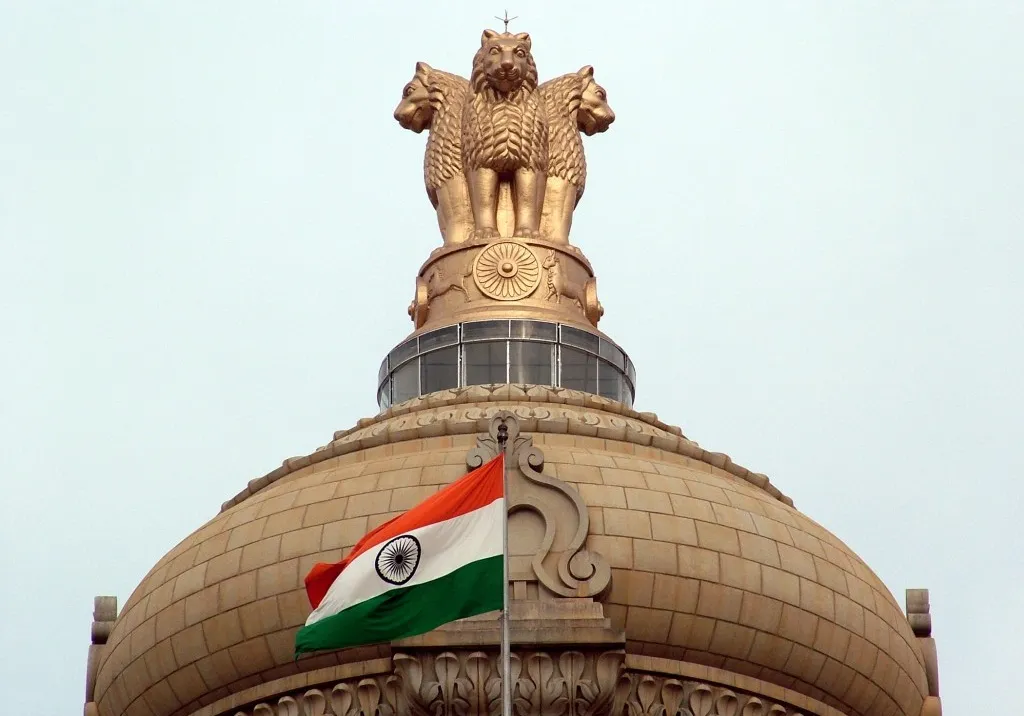
This fund was announced on the sidelines of the Korean President’s official visit to India, during a week that included strategic bilateral discussions between Korean leadership and Prime Minister Narendra Modi with senior members of his Cabinet. That timing is not accidental. Governments coordinate with industry on these things, and the presence of both Piyush Goyal and Korea’s Minister of Trade Dr. Jung-Kwan Kim at the announcement meeting confirms that the Unicorn Growth Fund has been blessed by both governments as a signal fund for the Korea-India technology corridor.
What this means in practical terms is that future Korea-India technology cooperation, whether in semiconductors, space tech, defence, or AI, now has a flagship capital vehicle to point to. When Korean companies want to structure India investments, they have a template. When Indian founders want to explore Korean partnerships, they have a credible fund with formal government backing on both sides as an entry point. When trade talks between the two countries move into technology cooperation language, both ministries can cite the Unicorn Growth Fund as evidence that private capital is already doing the work.
That is not a small thing. Most bilateral technology cooperation announcements between countries are structural rather than operational. They produce MOUs, working groups, and joint press statements without translating into deployed capital for years. The Unicorn Growth Fund is operational from day one. It has a name, a size, a manager, and a mandate. It is, in that specific sense, already working where most bilateral announcements are still talking.
What This Looks Like Five Years From Now
Project this forward, and the picture gets genuinely interesting.
If the Unicorn Growth Fund deploys at the cadence a typical $720 million growth-stage fund deploys, somewhere between 15 and 25 Indian companies will have KRAFTON, Naver, and Mirae Asset on their cap tables by 2030. A meaningful percentage of those will be in AI, deep tech, or consumer categories where Korean strategic partnerships could accelerate them into global markets faster than domestic Indian routes would. A meaningful percentage of those will also, predictably, fail, because venture capital is venture capital. But the ones that succeed will carry a Korea-India operational signature that almost no other venture-backed Indian company currently carries.
For KRAFTON specifically, the India bet will have matured from “the company that publishes BGMI in India” to “the strategic capital partner for Korean engagement with the world’s largest technology talent pool outside the United States and China.” That is a different kind of company. It is also, notably, a kind of company that could credibly IPO a second time in a decade on the strength of its India and Southeast Asia positioning alone.
For Indian founders, the fund will have provided a genuine alternative to American venture capital at growth stage, with Asian market access and technical expertise that American capital structurally cannot offer. For Indian esports specifically, the KRAFTON ecosystem will have continued to run BGMI, BGIS, BMPS, and the Krafton India Gaming Incubator, but the parent company’s India identity will have expanded far enough that the gaming operation becomes one arm of a much larger Indian presence rather than the full expression of it.
That is the interesting future that the Unicorn Growth Fund announcement makes more plausible than it was yesterday.
The Honest Takeaway
KRAFTON has been the most committed foreign gaming publisher in India by every measurable standard for the last half-decade. Launching BGMI was the easy part. Rebuilding it after the 2022 suspension took longer. Investing in NODWIN, Loco, Pratilipi, and Kuku FM took capital and patience. Running the Krafton India Gaming Incubator, the 128-college campus tour, BGIS, and BMPS took operational discipline that most foreign publishers would not sustain. That is the resume KRAFTON walked into the Delhi meeting room with.
The Unicorn Growth Fund is what comes next. Not because gaming in India is no longer important to KRAFTON, which it clearly is, but because KRAFTON has decided that being the best gaming publisher in India is not the full expression of what the India opportunity actually represents. The fund is not a departure from the gaming business. It is an expansion of the thesis that got KRAFTON into the Indian gaming business in the first place, which is that this country is going to produce the next generation of globally competitive technology companies, and early commitment to that will compound.
Six thousand crore is a real cheque. Two governments standing behind the announcement is a real signal. A fund manager with proven India discipline is a real operational choice. KRAFTON and Naver being the anchor strategic partners is a real alignment. Every piece of this fits, and the combination is stronger than any single piece on its own.
KRAFTON spent a decade learning how India worked. The Unicorn Growth Fund is what they learned with. For Indian founders, Indian gamers, Indian developers, and the broader Indian technology economy, that is genuinely good news, and it is the kind of good news that does not often come wrapped in a press release of this scale.