TL;DR

- CS2 features two main modes, Competitive and Premier, each with its own respective ranking system.
- CS2 ranks in Competitive adopt CS:GO’s familiar titles; however, they are map-specific, and you must manually queue for each one separately. Waiting times can sway popularity, and it’s led to bias in favour of banning maps in Premier mode.
- You’re locked out of CS2 Premier mode until you reach Sergeant Rank 10, which can take dozens of hours and requires a total of 50,000 XP.
- You have to win 10 CS2 Premier games to establish your CS rating, a flawed process that attempts to incorporate losses, team, and solo plays into consideration.
- CS2 Premier Season 4 is coming on January 19, 2026, with a change to the map pool: Train is out, and Anubis is in. It also means you’ll lose your CS rating and will need to participate in “recalibration” matches to regain it.
- As a consequence, the balance of “unranked” CS2 players can vary massively, which can see games being heavily swayed as you’re up against far more experienced people.
There’s nothing quite like Counter-Strike. For more than 20 years, Valve’s hardcore tactical shooter has stood as the gold standard for the FPS genre, evolving from the heyday of 1.6, adapting to the Source engine, experiencing an explosion of popularity with CS:GO, and culminating in its current state as CS2. With CS2 Premier Season 4 starting on Monday, and many new players looking to play for the first time, I’m examining why Valve’s system needs reform.
For the vast majority of Counter-Strike players who just want to enjoy the game in a relaxed environment, little will change. Casual mode, Deathmatch, Retakes, Arms Race, and the like will remain as is, but all the CS2 Premier ranks will be reset. The fancy colours and numbers denoting skill will be wiped clean, and you’ll have to start again from scratch. Is it worth clawing your way back up the ladder just to do it all again over in six months? Let’s get into it.
CS2’s Competitive mode’s map-based ranking system is poor
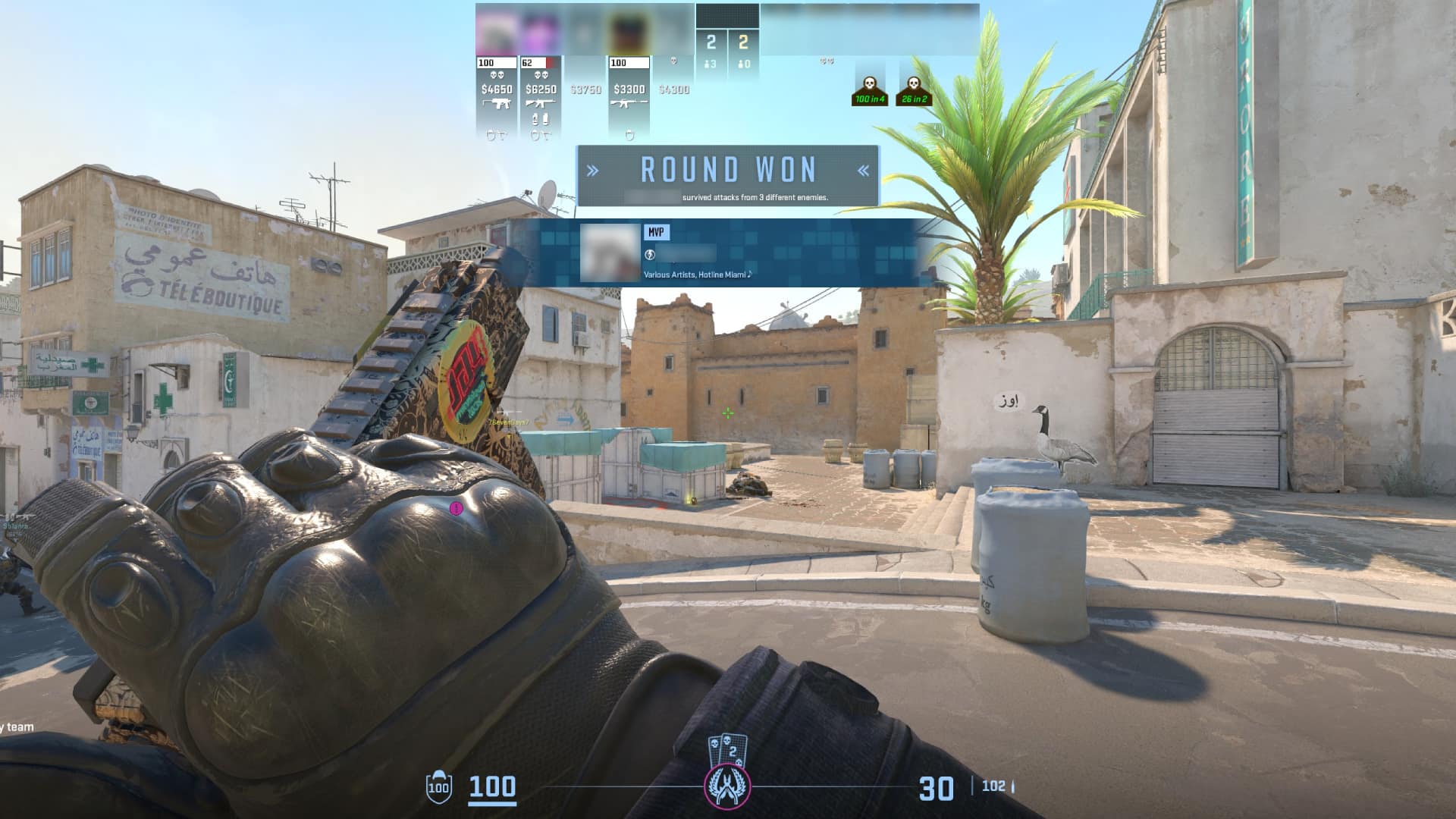
One of the most significant changes CS2 introduced when replacing CS:GO was the overhaul of the Counter-Strike ranking system. In Global Offensive, which ran from 2012 to 2023, you had a total of 18 ranks (ranking from Silver 1 to Global Elite), which were tied to your account. These ranks still exist in the game as it is today; however, you’ll now find them exclusively tied to CS2’s Competitive mode, where they are map-specific. This system complicates what should otherwise be straightforward, as player skill is entirely segregated based on individual environments.
It makes sense theoretically. If you’ve spent extensive time learning the optimal smokes, callouts, and developing the “game sense” in the likes of popular CS2 maps like Dust II and Mirage, then you’ll likely be pushing into the upper echelon of Master Guardian, Legendary Eagle, and potentially even Global Elite if you’re good enough. However, what if you’ve neglected to learn the intricacies of Train, Nuke, Overpass, and Ancient, where you’ll either be unranked (needing to win at least two games to place) or, incorrectly, stuck in low Elo Silver hell, where you’re matched with players who don’t know what they’re doing. As such, you’re disincentivised to branch out and try new plays.
The specific need to win two games to ascertain a CS2 rank for each map is not only incredibly time-consuming but also a complete roll of the dice, as the flawed matchmaking system rarely places you among players of a comparable skill level. As such, you’re either going to be banging your head against a wall with frustration as the rest of your team is utterly inept, or be getting completely and utterly outclassed by far higher Elo players who can outflank, outgun, and outplay you across the board. As a direct consequence, you’re either failing upwards once you’re on the board or you’re dominating and then moving on out of boredom, so where’s the incentive to play (and continue) in CS2’s Competitive mode? Well, you have no choice at first.
You’re locked out of CS2 Premier mode for a long time
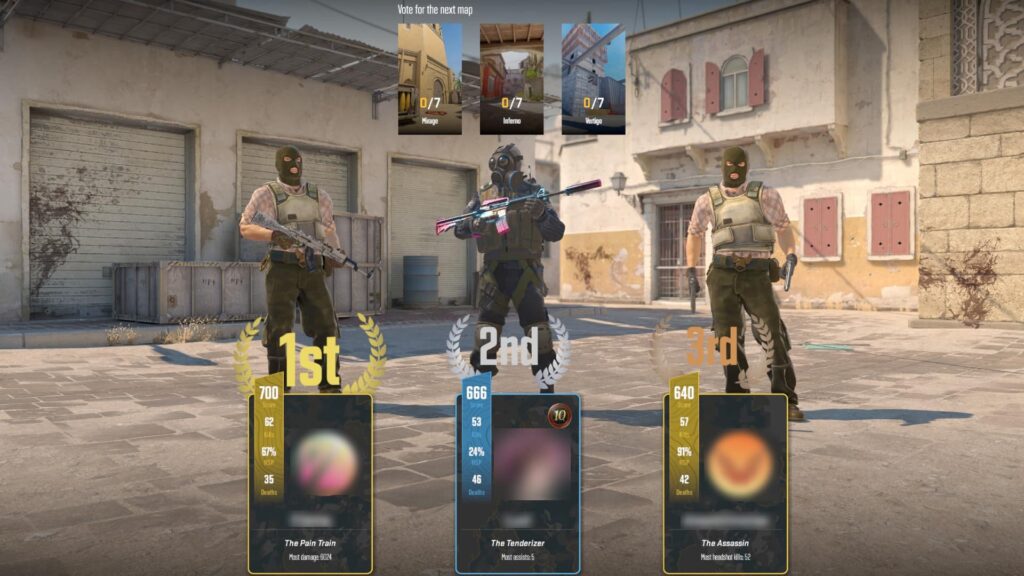
If you’re thinking you’ll just play CS2 Premier mode and completely avoid Competitive, then I’ve got some bad news for you: you need to reach Sergeant Rank 10 (procuring 45,000 XP) and have a Prime-enabled account before it unlocks. Depending on how much you play, this can (and likely will) take dozens of hours. XP is (largely) drip-fed, barring exceptions like weekly missions and temporary XP boosts, that can get you over the line, but for the most part, you’ll be stuck playing Competitive for the highest amount of XP earned (around 300-390) for a win, or endlessly Deathmatching for the largest XP drops per hour (0.2* your score) to get to this point.
In other words, you’re forced to engage with the main CS2 Competitive system, which means you’ll either grind out the one or two maps you get a feel for (discouraging you from learning the other core CS2 maps for that season), or you’ll just be taking what you can get from the active map pool. This is to say nothing of the elongated wait times for each map, with estimated queues far shorter for the likes of Mirage and Dust II than for Train, Nuke, Overpass, and others. Meaning you’re far more likely to jump into what gets you into gameplay sooner, and are even less likely to push the boat out and “get good” or “learn” other maps ready for Premier.
Grinding to Sergeant Rank 10 is a miserable experience for this reason. To get anywhere, you’re largely committed to failing upwards for the same two maps (likely Dust II and Mirage) while Deathmatching for the extra XP. Sure, there’s the likes of the scenario-based Retakes and the tag-team of Wingman, and, while these are fun novelties, the XP drops are so low that they’re not worth the time investment at this stage. In other words, Counter-Strike actively punishes you for engaging with its game modes and systems, and instead railroads you into the same bad habits needed for upwards progression – you, in turn, become part of the problem.
CS2 Premier mode suffers from many of its own issues
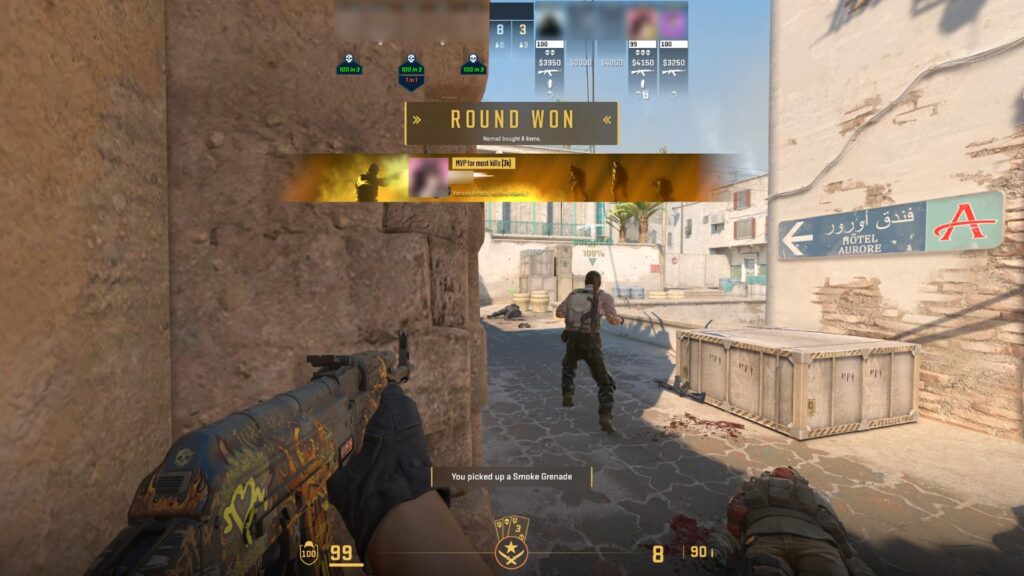
Unlocking CS2 Premier should be a triumphant moment, but it’s then that you realise that Valve has cultivated biases that have spilt over into its core game mode. As with watching CS2 tournaments, a total of 10 players (5v5) must vote to ban maps to decide what to play, as well as choosing to start on the CT side or T side, which can have different strengths and weaknesses. However, as previously mentioned, there’s already an established meta, where you’re almost always going to see Dust II, Mirage, and Inferno picked as Train, Overpass, Nuke, and Ancient are almost instantly banned every single time.
I should stress, this is very much the solo queue experience for new CS2 players. If you’re lucky enough to have four friends who have the time to start the game from scratch and coordinate after work or on weekends, then you may (somewhat) negate this issue, but it’s unlikely. For the most part, you’ll be waiting minutes to jump into a CS2 Premier game, and then having to run through the same two maps for many hours. Advancement gets halted, stagnation sets in, and then you’re again tunnel-visioned into developing basic understanding and strategies that work on Mirage, Dust II, and Inferno because no one wants to play anything else.
This is compounded by how you get your CS2 Premier rank. To establish your CS rating, you must win a minimum of 10 Premier games, which is denoted by a colour and a number. The operational word in that previous sentence was “win” because just “playing” Premier won’t count for much. An average CS2 game can last 30 to 60 minutes with its first-to-13 system, depending on whether Overtime is needed. Even if you’re blessed with god-like aim, omnipotent map sense, and play 4D chess with your enemies, you are incredibly unlikely to win 10 games in a row. As such, you’re going to be grinding out Premier for a while before you get a rank.
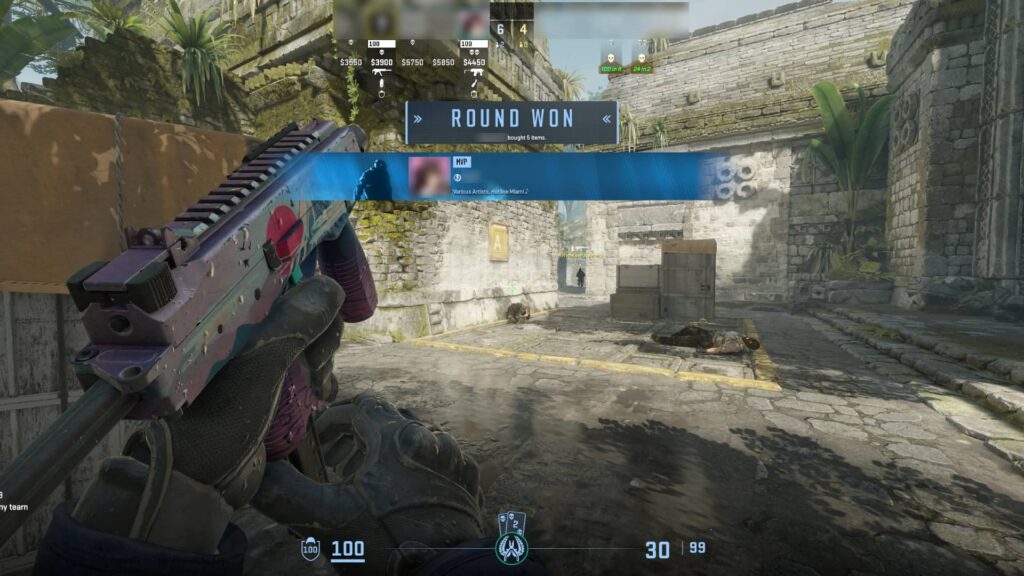
You’re beholden to two things in this long and (potentially) agonising process: biased CS2 map selection and the mercy of other players. The former is by the by, but the latter is where you’ll get to really evaluate whether Counter-Strike is the game for you. Effective communication is vitally important; you need to learn the callouts of where you are, where you died, where your enemies could be/are, where you’re planning to go, and what you want to do in order to succeed. That means speaking with a headset or microphone, pinging with the mouse, and actively using the scroll wheel, while also attempting to shoot your enemies, plant/defuse, etc.
Your mileage may vary, but the majority of players you’ll meet in low Elo CS2 Premier games are awful. You would assume that a lower skill level would translate to more casual (or kinder) communication, but you would be mistaken. If you’re lucky enough to have a team composition that understands the CS2 roles (Entry Fragger, AWPer, Support, IGL, Lurker, and Anchor), you’ll likely be dealing with comms that are less than ideal. In short, “leaders” who expect perfection from the rest of the team with what they ask for and then perform poorly, leading to frustration. Where this is Premier, and your ranks are on the line, tension is heightened, and people are rarely friendly when up against it. This is true if you’re trying to establish a CS rating with your first 10 wins or climbing up the ladder; punishment for failure isn’t tolerated at the entry level.
Built up to be knocked down again
Okay, so you’ve recently started playing CS2 and have wanted to take the new game seriously. You’ve grinded to Sergeant Rank 10 by playing Competitive, and won 10 Premier games to establish your CS rating, which is no quick (or easy) feat. It could have taken you a matter of weeks (or months), but that doesn’t matter because with the incoming CS2 Premier Season 4, it’s all about to be washed away. Forget your dreams of climbing out of low Elo hell; once the board is wiped clean, you’ll need to win 10 more games as a “recalibration”. Every win (and loss) you achieve (or suffer) in that duration, which could be days or weeks, depending on your activity, factors into where you fall on the ladder.
CS2 rank decay is another thing to consider. If you don’t play for two weeks, you can see your CS rating massively drop (or outright reset), and that’s to say nothing of the incoming seasonal reset with Premier Season 4 expected for January 19, 2026, where it’s all back to the start. Matchmaking, therefore, becomes a mess. Hundreds of thousands of now “unranked” players fighting to ascertain their “proper” rating means you’re going to (likely) be mis-matched with players who are lightyears better than you, as you’re outplayed early on, driving down your Elo before you’ve even had a proper chance to get a piece on the board.
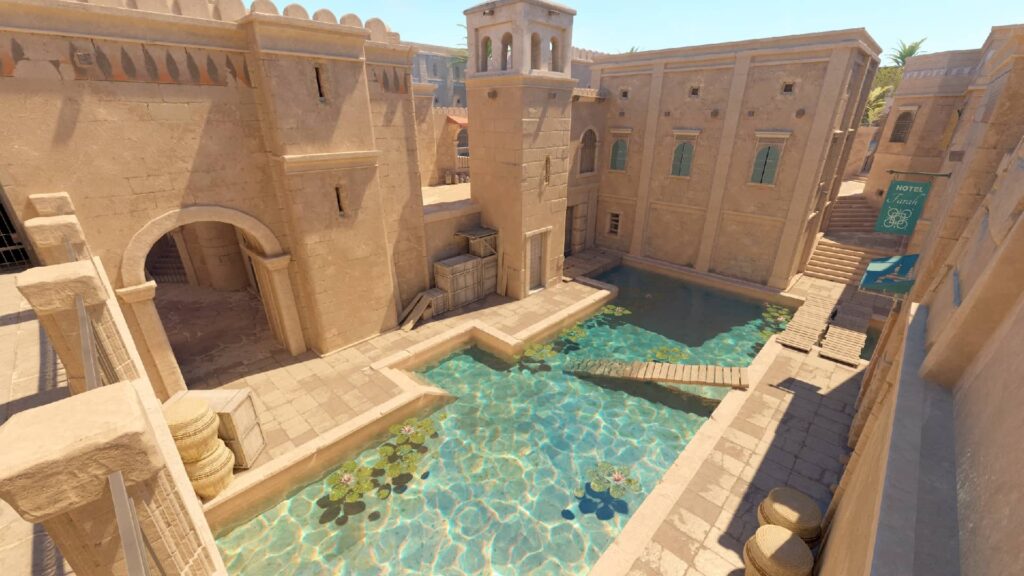
That’s to say nothing of the CS2 map changes, which are coming to Premier Season 4. The full CS2 map pool is confirmed to be Ancient, Anubis, Dust II, Inferno, Mirage, Nuke, and Overpass, which means the rumours of Cache’s apparent return were false. It also means that Train is out, which shouldn’t be too shocking, as it was considered the worst CS2 map for competitive play, and was banned quicker than most. It also means if you did spend any time trying to get a feel for Train as a new player during the current season, that you’re out of luck; locomotives are out, Egyptian shiek reigns.
Conclusion
CS2 is massively inaccessible and deliberately intimidating for new players, making it a minefield to navigate for those interested in learning Valve’s leading tactical shooter. The flawed Competitive game mode, the heavy grind required to unlock Premier, the railroading towards map biases, and flawed matchmaking during each seasonal reset make Counter-Strike tough to recommend even for those who have the time to invest.
Let it be said, you will need time to play Counter-Strike to even get a CS rating. That doesn’t account for the dozens of hours spent in Deathmatches, or hours you may dedicate to the likes of Aimlabs or dedicated Steam Workshop maps for aim, recoil, spray, and crosshair placement training, such as Aim Botz, Recoil Master, Fast Aim, and Yprac Aim Arena, just to have a chance in the first place. The process of doing so can take dozens, potentially even hundreds of hours, before you’re even viable to play the game like this.
It’s not surprising that VALORANT has eclipsed the CS2 player count now, and I don’t blame prospective newcomers for being turned off from the climb long before ever putting a foot on the snow overlooking the summit. Full respect to those who made it to the big leagues, but good luck to anyone who wants to start fresh in 2026; you’ll need it.
FAQs
When can I play CS2 Premier?
You need to buy Prime Status from the Steam store (which costs $14.99 / €13.29 / £11.09) and reach Sergeant Rank 10 before it’s available to you.
When is CS2 Premier Season 4 happening?
CS2 Premier Season 4 will begin on January 19, 2026. It will see all CS ratings reset for active users, and recalibration matches will be needed to reestablish your rank.
How often does the CS2 map pool change?
CS2 maps in active duty can change as often as every six months, which is the duration of a CS2 Premier season. However, maps are not always rotated with each new season, as it can take 12 to 18 months for them to be rotated.
Does CS2 have decay?
Yes, CS2 rank decay is a part of the Premier experience. If you’re inactive for two weeks or more, you could see a heavy decrease in your overall CS rating number (and colour), which can impact matchmaking. All CS ratings are also reset at the end of the season, too.
The post CS2 is awful for new players – Why Valve needs to rethink Competitive and Premier appeared first on Esports Insider.