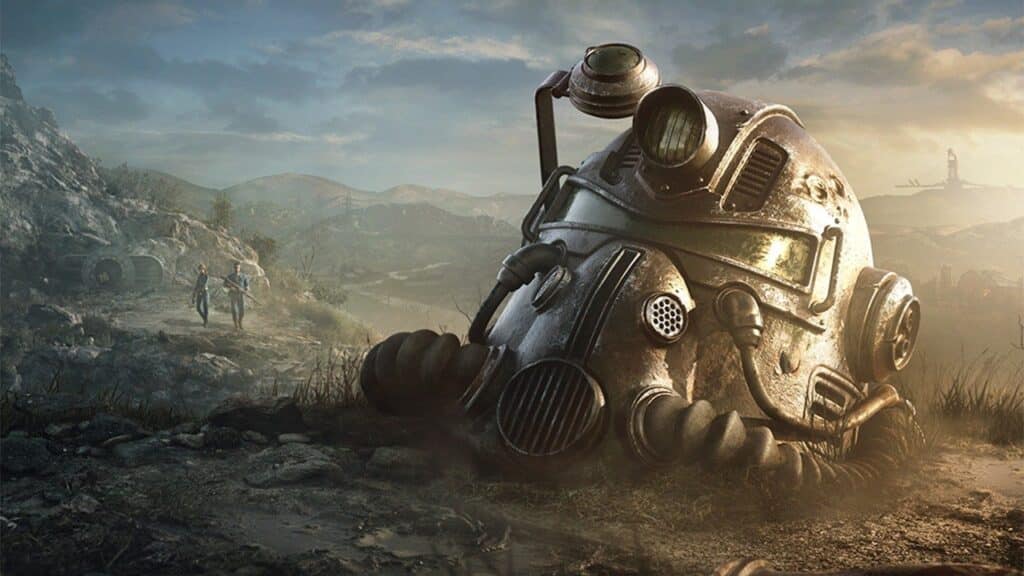
Former Bethesda Lead Artist Nate Purkeypile has called on the company to tighten up the scope of Elder Scrolls VI to create a more captivating, human-made world rather than chase the scope of Starfield in an exclusive interview with Esports Insider.

The former World Artist, whose credits include Fallout 3, Fallout 4, Fallout 76 and Skyrim, is also known for creating such fan-favourite DLC as Point Lookout, also gave his thoughts on where to set the next Elder Scrolls and Fallout games.
Purkeypile now works as a solo developer on his own projects, including The Axis Unseen, and gave away some details on what he is currently working on, and his views on the wider games industry ahead of what could be a key year with the launch of Grand Theft Auto VI.
Read the full interview below.
- A Year of Hope: Esports stakeholders review the industry in 2025
- The biggest esports betting stories of 2025
- Esports stakeholders predict the state of the industry in 2026
ESI: Has the experience of going from such a big studio as Bethesda to working as a solo dev been a liberating experience?
Purkeypile: It’s really nice. I just get to make what I want. I don’t have all the meetings and other stuff from being in a leadership position at the end at Bethesda. There were a lot of meetings. On Fallout 76, I’d say I was in 20 to 25 meetings a week. It was a little bit less on Starfield, but still a lot. Maybe like 15?
At that scale, it’s part of the job when you’re in those sorts of leadership positions. There are a lot more layers of approval, which is nice to now be able to skip and just make something.
ESI: What would you say you learned most from The Axis Unseen that has informed your approach to your follow-up projects?
Purkeypile: I think just being able to design systems in a really cohesive way, knowing how the art, the design and the programming all work together. Since I’ve been making games for a long time, I know how all that stuff works, and I’m able to do it much, much faster, and I really like that. I can make sure it’s done in an efficient way so it all makes sense. I don’t have to argue with anyone. That’s great.
ESI: It feels rare to get a game that commits to the metal genre these days, like The Axis Unseen, but metal and gaming used to be a familiar mix in the 90s and 00s. Do you think studios are missing a trick by not tapping into the genre’s potential these days?
Purkeypile: I think it has come back a little bit with the new Doom titles, but I agree that it’s kind of weird that people would even ask me, ‘Why would you do a metal game?’ Most of the formative games back then were metal games. Not like all of them, but there was a lot.
ESI: Were you ever frustrated by the limitations of the Fallout universe in terms of musical genre, when in a lot of ways, Fallout can be such a metal setting?
Purkeypile: I guess it never bothered me because I always viewed the music as part of the comedic angle of Fallout and a way to soften it.
That’s why Fallout is a lot more approachable than a lot of post-apocalyptic stuff like The Road or something like that. I love The Road. It’s a great book and a great movie, but it is depressing as all hell, and most people don’t want to spend 200 hours being sad.
If you made The Road into a game, it would end up more like This War Of Mine or Frostpunk or something more of that vibe, and they are great games, but maybe not what everyone is looking for to relax at the end of a day full of stress.
What did you enjoy most about your work to translate Fallout into a vibrant, first-person world?
ESI: What did you enjoy most about your work to translate Fallout into a vibrant, first-person world?
Purkeypile: I enjoyed working on the cities the most because it was about making this living space that people could really exist in. How do they go through their lives in Diamond City? You have to think through all that stuff. What do they do with their trash? How does power work? How do they get water? All these things. I really enjoyed working on that aspect
I’m pretty happy with how it turned out. I don’t know. Like, there’s always more that you could do, but with those games, there’s an infinite scope, and that’s why I always try not to really crunch on them, because where do you draw the line? I don’t even think crunch works beyond the short-term.
ESI: Are there any ideas for factions, monsters or cities you had for a Fallout game that didn’t make it into the series?
Purkeypile: I feel like a lot of the stuff is in there. It’s just other areas that would be fun to explore in sequels.
I’ve always wanted to see what Fallout would be like in the Deep South. We’d had plenty of other areas like the East Coast and the West Coast, but that’s something that hasn’t been touched on, and it also has a lot of culture and interesting places to visit.
Fallout 5 in New Orleans? I mean, that would get my vote for sure. Some people think it should be in New York or somewhere like that but man, I don’t need another game set in New York. There are so many New York games, and people know that city so well.
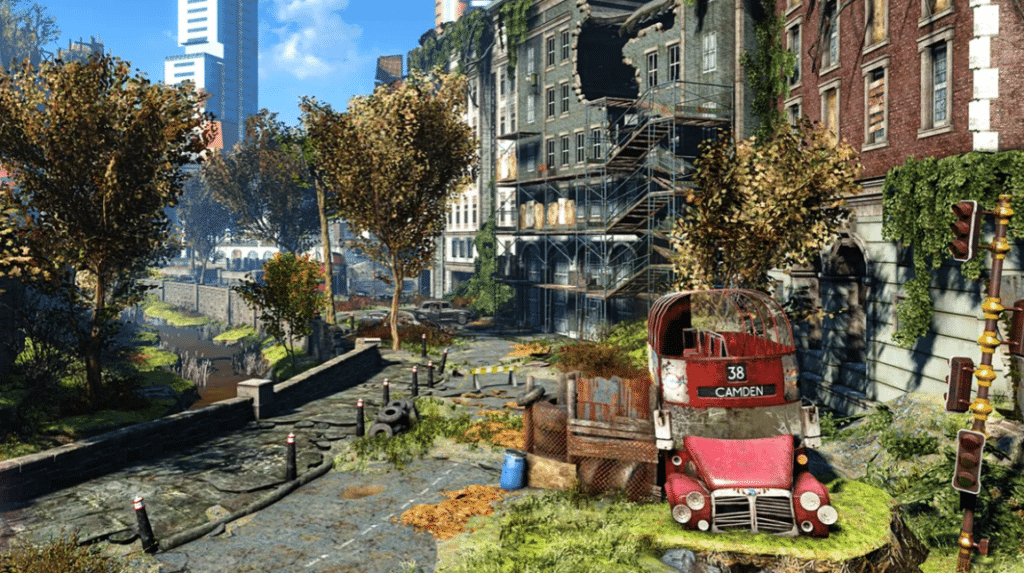
ESI: What have you made of the Fallout: London mod, and would you like to see Fallout go outside of the USA in a future sequel?
Purkeypile: I’m aware of it, but I haven’t actually played. I think that’s super cool. I personally wouldn’t expect Bethesda to actually do that kind of thing outside of DLC because they’re very tied into the whole Americana thing.
I do think that DLC is a great opportunity to take Fallout to new territories like that because, well, there was a whole DLC about being on a friggin spaceship! You can do a lot in DLC that you might not necessarily be able to do in the base game.
Realistically, it is a business, and I think it’s pretty evident already that if you push a franchise a little bit outside of what people are expecting, it can backfire a lot.
With Fallout 76, we definitely saw that. It came back and got better and has a pretty stable fan base now, but as much as people say they want new things, they probably want completely new things, not something that’s too new within an existing IP. That’s pretty difficult to actually pull off successfully.
ESI: Appalachia seemed like an inspired setting for a Fallout game with Fallout 76, but do you think going into that part of the USA turned some people off the game?
Purkeypile: No, I think it is more of just multiplayer and systems and the lack of NPCs.
I guess I’m kind of biased, but most of the comments I saw liked the setting. People thought the map was one of the better ones. I was pretty happy to see since I picked all the things in that map and designed it.
ESI: Are there any places in the world that probably escaped the worst of Fallout’s nuclear war that might be carrying on relatively normally, and where would you want to visit in the setting that we haven’t seen yet?
Purkeypile: I mean, that’s entirely possible, especially because the world is so big and wind patterns and stuff. Who knows. Maybe Australia and New Zealand are totally fine.
I think China is a pretty obvious one to visit because there’s a whole bunch of lore that ties in there.
Another place that I kind of got in the game after a lot of pushing was space. I had the whole crashed space station in Fallout 76 because I’d been pushing for that since Fallout 3, but eventually, because I was Art Lead, I just decided, screw it, I’m going to make it. I just put it in. Then you end up with the audio logs of astronauts watching the disaster from above, which I always thought was a cool idea.
ESI: Fallout is such a rich series for little details like that, but how gratifying has it been to see players take these settings you’ve built and run with them to create their stories, roleplaying ideas and more?
Purkeypile: I think it’s really cool, and it’s nice that people keep coming back to the games too, because I’ve worked on other games that were fine, but nobody’s going back and playing BloodRayne 2 over and over these days. It’s not their comfort game. Maybe there are three people out there where that’s the case, but not like Fallout and Skyrim.
ESI: Does the Fallout TV show and its continuity make it more difficult to take the series back to California or Nevada again?
Purkeypile: I feel like that would be an open conversation. I would assume that sort of thing is approved by Todd Howard to make sure it all works, so I wouldn’t rule it out.
I know they’ve been more comfortable doing East Coast stuff just because of the proximity, but who knows?
ESI: What have you made of how the show has leaned into your work building out the worlds of Fallout 3 and 4?
Purkeypile: It’s wild, actually, how accurate the show is. I know my friend, Josh Jay, probably feels that even more because he did the vaults, and the show is like bolt-for-bolt accurate. It’s a really weird feeling. Like, assets we created for a video game exist somewhere in the real world on some set. That’s crazy. It definitely seems like they got all the actual 3D models and everything to work from.
It even has my cats. My cats are in the show! All the paintings from Fallout are in there, and my friend Ilya did paintings of my cats and then, like in the background, somebody sent me a picture of the show, and I totally missed it watching it myself, but like it’s like dude that’s my cats!
ESI: Is there any chance we’ll see your infamous “F*** Off!” graffiti from the games in the show?
Purkeypile: Man, if they put that in there, that would make me so happy!
ESI: Is there anything you wish the show had done differently?
Purkeypile: One thing that stood out to me was that there are multiple airships. That was a surprise to me that the Brotherhood can roll up with like five different airships when it seemed like such a huge deal that they had that one in Fallout 4, so that was a little odd.
I don’t know. Who knows what the lore justifications are for that.

ESI: We saw the brown and grey colour palette of the world in Fallout 3 replaced by more colour in Fallout 4. Do you think that’s a trend Bethesda will follow into Fallout 5 to add even more visual variety and maybe signs of new growth in the world?
Purkeypile: Personally, I like having a little bit of a mix, which is what I like to do in Fallout 76, where you have certain regions that are a lot more rundown and horrible, but then there are pockets where it’s nicer.
That makes sense from the perspective of weather patterns and valleys that don’t get as much of the fallout and damage.
For a game that you’re in for like hundreds of hours, I like having that variety. Fallout 3, as much as I love it, is a bit too one-note for my tastes.
ESI: Could we see Bethesda riff on current events to add to the lore of the game, given Fallout is a bit of a satirical take on the USA?
Purkeypile: I think they would probably stay far away from anything that touches on real politics, and there’s enough stuff in the games already that who knows could become real, like annexing Canada. Isn’t that ridiculous? Oh wait!
ESI: Given your success in creating a heavy metal horror game in The Axis Unseen, and the horror elements in Fallout like the Dunwich Borers, do you think Bethesda should lean harder into M-rated horror to up the stakes in Fallout 5?
Purkeypile: I think it’s another thing that fits in as an element of the game and not the focus.
I would argue that Fallout 76 has quite a bit of horror in it because most of the monsters I added are basically cryptids. They’re not really, but people think they are, and they use the cryptid names, so it fits in well without being a pure horror game.
ESI: Does increasing the horror also allow for more humour? With the light and shade of the setting?
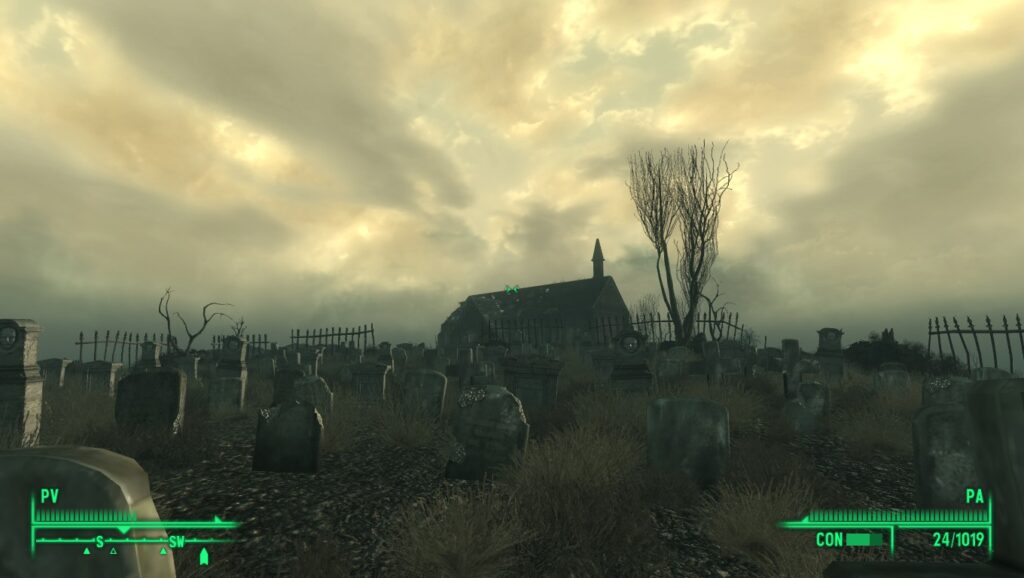
Purkeypile: Yes, and you’re in these games for so long it’s nice to do goofy stuff, build things, go to some random scary place like that church in Fallout 3 with the Deathclaw. That’s a great dungeon. That’s totally a horror space.
ESI: Some people disliked the more supernatural elements in Fallout 4, like The Cabot Family, as they felt it took away from the sci-fi setting of Fallout’s world. What’s your view?
Purkeypile: I think as long as it’s not too overdone, it’s good to have little bits of it here and there. It helps make people’s imaginations run wild.
I’ve been involved in a lot of that stuff. I was the co-lead on Point Lookout, and I hid a thing called the Interloper in Fallout 76, so I’ve had my hands in a lot of that weird stuff.
I like it being these things that are like a surprise, and you don’t really know what is actually true or not. Like the Interloper, for instance. Is that some weird creature, or is it like a failed FEV experiment? You don’t know. I think it’s better to not actually explain it.
I would argue Stranger Things went too far down that route, personally, of trying to explain everything.
ESI: Do you agree with the value-per-hour argument as to why games like Fallout, Skyrim and GTA VI should be $100 or are price rises going too far?
Purkeypile: I think $100 is too much, and I’d be surprised if they did that.
I think it’s better to monetise in other ways with more DLC and optional stuff.
I even think that $70 has been a stretch for a lot of people. I don’t really like spending that much on games.
It’s part of why I’ve leaned more towards indie games, but I really don’t value the number of hours played, personally. I know some people do, and if you’re only gonna play a couple games of the year, great, but I like to play a lot of different games. If someone’s like, that’s only a four-hour game, I’m like, great!
I think it does help indies, and I think it’s also been proven that a lot of that money being spent in AAA is not actually being spent on what people care about. As cool as it is that the pupils on a character are amazingly accurate, and there are little hairs on people’s faces and stuff like that, there are games that have come out like Schedule I, which are not super high fidelity and still done amazingly well.
You have to ask, is that really what people care about? Do you need to do that? You can still make things that look really nice, but you don’t necessarily have to go that far.
ESI: Are Rockstar in a privileged position for having the luxury to sit back and decide GTA VI is gone when it’s done, compared to what you’ve experienced in your career?
Purkeypile: Yes, absolutely. I think Rockstar is one of the only ones that have the track record to prove they can actually take their time on these games, too.
In most cases, if you see these really long projects with hundreds of millions of dollars, they often just kind of fall apart, and there is a lot of value in shipping a lot of things and having a team that’s used to shipping and figuring that out.
Maybe once you’re down the road, having proven successes many, many times, then you can start doing what Rockstar is doing. But I think that takes a long time to get to that point.
You can see it with CD Project Red. They were much, much smaller back in the day and were not spending as much money and as much time. You need to build up to those bigger projects and a lot of the game industry crashes from too much money being thrown at studios because this one person worked on a successful thing once before.
You need a team that has all that knowledge and is used to shipping things together. That’s a very expensive bet, and I think it’s been proven to be a very bad bet, generally speaking.

ESI: Are the teams behind Elder Scrolls VI and Fallout 5 in a bit of a no-win situation, given the levels of expectations on both games now?
Purkeypile: Yes, and that definitely factored into me leaving because Skyrim being one of the top 10 games of all-time, how do you beat that?
If they do, great! And I hope it’s a great game, but even if it’s just as good as Skyrim was, you’ll still get so many people throwing out hateful comments. I’m sure there will be more death threats again. All of that stuff. It’s really unfortunate that that’s the way things have gone.
ESI: Why do you think Elder Scrolls IV was announced so early?
Purkeypile: My assumption was always that we were announcing Starfield, and it had been so long already since Skyrim that we needed to make sure people were not just pissed at us. It’s a very expensive way to do that, though. Those trailers are not cheap.
I would imagine that they will take a while to deliver it because there’s so much pressure behind that title, and I think it’s been proven with Starfield that they’re finally okay, actually delaying stuff. That was not really the case early on. On Skyrim, it was like, ‘It’s coming out on 11/11/11’ and we were like, what?! Oh boy, no pressure.
I think there is less economic pressure to just get Elder Scrolls VI out on a date, but there is more economic pressure to actually make sure it’s good, and I think that’s a good thing. That’s healthy so long as they’re also honest with the team about that.
That’s something that can happen where the team get told here’s the date, we got to the date and psych! It’s later. And everybody knows that’s coming sometimes.
ESI: Could Bethesda be holding back info on Elder Scrolls VI and Fallout 5 until they see the reaction to GTA VI so they can find the right release windows?
Purkeypile: I feel like they’re just going to be in their own universe doing whatever because the titles are very different.
I’m sure there’s plenty of audience overlap and all, but just because one game flops doesn’t mean another will necessarily. There can be a whole bunch of reasons that happen.
ESI: Where do you think Elder Scrolls VI should be set and why?
Purkeypile: I probably shouldn’t guess on that, other than not one of the regions that they’ve already done recently. Outside of Daggerfall. That doesn’t count.
My hope would be that they would just pick one region of Tamriel because that’s part of why I was not super into Starfield. It was the scope above all else.
I think there is something to be said for going a bit more constrained. I always thought that was a weird goal anyway. No one before was saying I wish there were more of a Bethesda game! It’s like, dude, people are playing that like a decade plus later. Do you really need it to be bigger? You can always dig deeper and deeper within that space because it’s already so big.
Purkeypile: I think there is a little bit more opportunity there with the Elder Scrolls franchise to do that.
From Fallout 3 to Fallout 4, and Oblivion to Skyrim, even though there are a lot of similarities, they did basically make everything scratch and redo a lot of things, so there are fundamental differences.
I would expect the same because we’re not talking about the yearly Call of Duty franchise, where there is far more similarity. I know they mix it up a little bit, but it’s not the same kind of leaps.
I would hope that Elder Scrolls VI has some new ideas, like systems you’ve never seen before. Who knows, maybe magic works in some completely different way, or there’s some new perk tree.
I mean, I’ve always wondered what’s outside of the continent of Tamriel. It’s like one big landmass, basically. Isn’t there a whole planet to explore? What else is out there? That’s what I’ve always wondered.
I think having a mix of that would be interesting. If you were on a boat or something, that’d be cool. Black Flag was a game that I really liked as much as I kind of burned out on the Assassin’s Creed games, but I like being on boats.
ESI: What’s it like to work with Todd Howard, and is the public perception some people have of him being this perfectionist bottleneck fair?
Purkeypile: I just think the whole operation has grown a lot, and I’m of the opinion that if you’re going to have someone in a director position, they should be full-time on that.
My preference would be that Todd picks his focuses more or passes stuff off more. I think it’s really hard to have enough insight into a project if you’re not dedicating yourself to it entirely, especially if you can just demand that anyone does whatever you say. That can be dangerous.
Sometimes it’s helpful to have an outside view and make calls that make sense, but it isn’t necessarily always that way.
I think that’s pretty hard to pull off successfully at that scale. That’s a lot of plates to keep spinning, so I don’t envy his position, and I hope it goes well.
ESI: Your work on Blackreach was a side project that wasn’t on the official schedule, but is it even possible for a developer to sneak in something like that anymore now that Bethesda is such a massive studio?
Purkeypile: I think it’s a lot harder. It was me and Joel Burgess and I think Daryl Brigner, that did that, and it was totally not on the schedule. I think that kind of thing at that scale can almost get you in trouble, which is unfortunate because I think that is where a lot of the more interesting stuff came from.
I personally think it’s better to work in a way where you can allow that freedom and while you obviously want to check what does make it in, and you don’t want to have people just putting things in the game and no one ever sees, but giving people the freedom to do what they want is what I think makes those games successful because then it’s not this checklist from producer.
I mentioned being burned out on the Assassin’s Creed games, and that’s kind of why. Those Ubisoft games, despite being fun, are very repetitive and by the numbers. They don’t have the same sort of expression and weird things you find off to the side.
ESI: Is there a risk of brain drain at Bethesda, or is there a chance for a new generation to take Elder Scrolls and Fallout in a new direction?
Purkeypile: I hope the new hires do well, but it takes a long time to build up teams and when I was there, a lot of people had been there a long time. The average was 10 years or something.
There are some people that I worked with back in the day who are still there, but I think saying that there was a brain drain and that a lot of people have left is accurate. If you take the picture of the Skyrim team and look at how many people have left, it’s significant.

ESI: There’s often a focus on the bugs in Bethesda games, but not on the miracles of all the systems working together as they do. Are there any technical hurdles from working on those games that the public might think is an easy fix, but was actually an incredible job from you and the team to overcome some fundamental architectural nightmare?
Purkeypile: I mean, shipping it at all?
The way that those games are approached is far closer to a simulation, which is why those bugs happen and why I think it’s really interesting compared to a lot of other open-world games.
It’s far more like a stage play. As much as The Witcher games are great, it’s not working in that way. You go into a town, and someone is stuck in a spot, doing the same repeated actions. I think you have to look at other things, like the Kingdom Come games, to get a little closer to what the Bethesda games are doing.
Shipping a game is hard. Shipping an open-world game full of systems like that? Even harder.
ESI: What are the legacy issues that Bethesda could put to bed if they ditched their old engine for Unreal 5 for their next sequels to Elder Scrolls and Fallout?
Purkeypile: If they could go no loads, that would make me so happy.
That is extraordinarily painful as a developer and as a player to me. I don’t think games should have loads, especially to that extent, anymore.
Working with Unreal 5 would just make the whole game better because there’s a dramatically better iteration loop and that cannot be understated.
Anytime you want to check something in the Creation Kit, you have to reload the entire game separately, which is a very, very, very substantial amount of time.
In Unreal, when I’m working on something, I just hit play. There might be a little bit of a load there, but it’s seconds. If that. I found it way better to work on, and it’s why I also will never work on a game with baked lighting. In a way, it’s very similar, where you’re flying blind and just kind of guessing how it’s going to end up later.
The more iterations you get on anything, the better it’s going to be. I feel like I spent like half my life loading when I was at Bethesda.
ESI: Bethesda games track every potato and spoon. As a solo dev, do you look at that as a brilliant feature or a massive waste of technical resources that could go toward AI or animations?
Purkeypile: I think it lends a lot of authenticity to the world to not have everything in there like an old school Nintendo game that resets every time you come back in a room.
People point it out as something that could never work in Unreal, but my response to any of those things is that everything can take time, but it also takes a whole lot of time to keep an engine relevant.
So to also do those things in another engine, it’s entirely possible because they spent a lot of engineering time on Starfield doing things.
Do you want to be solving the same problems other people have solved already with lighting and physics and all these things, or do you want to take the unique elements of your game and spend your time on that?
Personally, I think it’s better to spend time on the unique things.
ESI: Rockstar is reportedly pushing unprecedented AI for NPCs in GTA VI, but based on your experience with Bethesda’s radiant AI, what is the actual limit of making a city feel alive before the simulation starts to break under its own weight?
Purkeypile: You have to test things more, dramatically so, but it does make it a lot more interesting.
Playing a GTA game versus Cyberpunk, one feels like an actual city, and one doesn’t. I love Cyberpunk and had a great time with the game, but that aspect of it doesn’t hit you on the same level at all. It doesn’t feel like a real place, really.
ESI: Do we think we’ll see more studios launch their games unfinished, as was the case with Cyberpunk 2077, only to fix it after it’s been released when their ambitions are bigger than what they deliver during development?
Purkeypile: I feel like it’s really risky and there’s been a lot of pushback on that.
That resulted in stuff I had never even seen before. Sony flat-out pulled it from their store. That seems like a questionable business strategy to me.
I’m sure they were forced into it for various marketing reasons, and those are super hard to move around and whatnot, but yeah, I would not recommend that to anybody.
ESI: If Rockstar came to you and said Nate, we’re making GTA 7 in your vision, where would you take it and what would you do?
Purkeypile: Maybe GTA: Texas? Get Dallas and Austin in there. You’ve got a nice clash of the cowboy vibe of Dallas and all the crazy hippies in Austin. There’s a lot of weird stuff there. San Antonio is super cool, too.
I think if they added more elements of an immersive sim, it would still have the whole massively cinematic focus as well, and there is a proven appetite for that sort of gameplay among GTA players.
People are essentially living their lives in GTA: Online, which is insanely profitable for Rockstar. It’s generating staggering amounts of cash.
I think that’s kind of proven the desire for people who want that, who are like buying boats and penthouses and whatever.
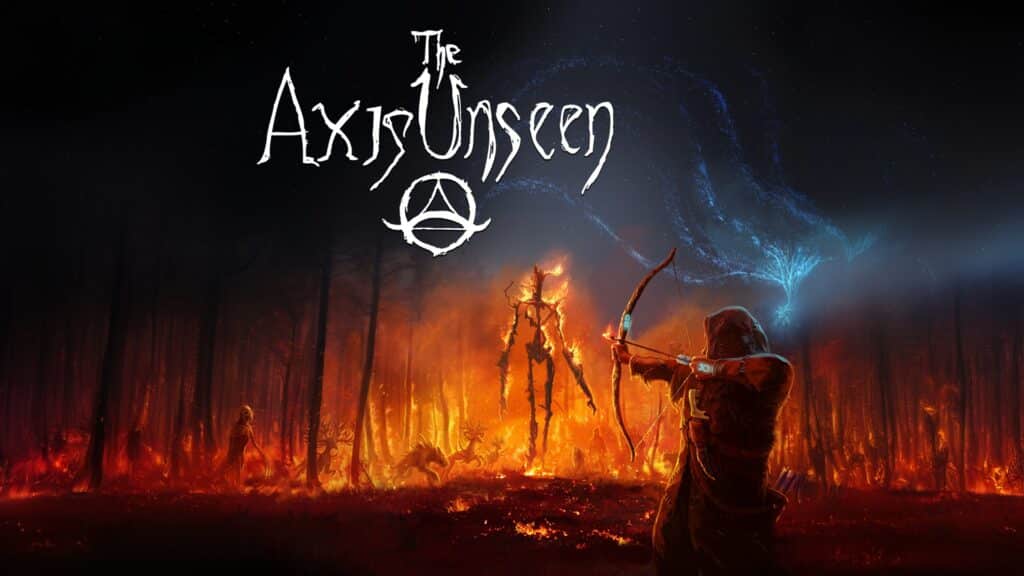
ESI: Was The Axis Unseen an attempt by you to kill the Ubisoft map, and do you think big studios like Rockstar or Bethesda are finally ready to let players actually get lost again?
Purkeypile: It definitely was a reactionary game in some ways. I was tired of staring at menus and making it so apparent to the player that you’re working to complete a checklist. That’s pretty much why I made that game.
I wanted a game that you could feel like you were really in the world. It’s a polarising game. Some people want that, and some don’t. But I think for the people who appreciate that kind of thing, it hit a nice sweet spot.
I think it’s really hard to pull that off in AAA, though, because at that scale you can’t have that many people getting lost and confused. Not everyone wants that kind of feeling.
ESI: Does that also affect difficulty in creating games now, so as not to scare off the mass market by making things too tricky, unless you’re FromSoftware?
Purkeypile: There are a lot of very specific things in FromSoftware games for how they approach difficulty.
You’re always actually making progress, I would argue, in learning things. That’s what a lot of people miss whenever they make a hard game. It’s a tough thing to pull off.
FromSoftware are another team that took a long time to get to the point of being able to create Elden Ring and having that kind of success. I remember being back in college and hearing about Demon Souls, and it was this weird fringe thing, not like Elden Ring.
It’s very hard to get to that point, and they built up to it smartly. They started off far more constrained, and Elden Ring is reflecting all those things that worked and what didn’t work, and it became their opus, I would say. Bloodborne is the one that got me into it all, and I love that one also, but Elden Ring’s a masterpiece.
ESI: If difficulty is hard to get right for a lot of other studios, with games like Fortnite moving toward this idea that everyone is a dev, is the future for Elder Scrolls, GTA and Fallout one where they become toolsets for players to build their own adventures?
Purkeypile: I think it depends on the game. Broadly speaking, a lot of games have just leaned more towards trying to keep people playing them for a very long time, but that’s also proven to be kind of a questionable long-term strategy in my opinion, because if you look at the top 10 charts of who’s playing what every year, it doesn’t change much, so it’s tough.
You’re always going to be competing against your past self and everybody else and all the back catalogues that are on sale or given away for free on Epic and Game Pass. It’s a tough industry.
ESI: If you were advising the Elder Scrolls VI or Fallout 5 teams today, would you suggest doubling down on player-built worlds, or returning to more hand-crafted, static cities like Diamond City and Rivet City?
Purkeypile: I think it’s good to only do a handful of those big cities personally because they’re incredibly time-consuming and can take up such a massive amount of the design and art budget.
In a way, they’re filling a certain role within the gameplay that you don’t need to replicate 10 or 11 times.
I saw rumours that there could be 12 cities in Elder Scrolls VI, and there’s no way I would sign that off. There’s so much other cool stuff you can do for the amount of time to even do one city.
ESI: Would that be a case of Bethesda repeating the mistakes they made with Starfield in an Elder Scrolls game by going for scale for scale’s sake?
Purkeypile: Yes. Obviously, each city would be different, so you wouldn’t need all that replicated stuff we saw in Starfield, but still, a city is a city.
You’re going to go there to buy armour and weapons, but imagine what kind of cool dungeons you could have for the time and resources that go into a city. You’d get like 30 dungeons out of that.
ESI: Does the urge to make bigger and bigger games just risk giving us empty experiences, especially if developers need to fill huge maps with more procedural generation rather than human-crafted features?
Purkeypile: I’m 100% not a fan of that stuff. I think there’s a lot of intentionality when you’re laying out an open world for exactly where the sightlines are. Every single hill. Every single tree. Procedural generation is useful as a tool to let you build that faster, but I think leaning on that to build infinite space has zero meaning in the end, and most players bounce off it.
I think it can fit in if you really dig in and make it the focus of your game, like No Man’s Sky did, but that game is more actually procedural than Starfield is.
Starfield, I would argue, is not even actually procedural because it’s pre-built chunks that get stitched together, so you see a lot of repeated things like that one factory 20 times already.
That’s not procedural at that point. You’re just rolling the dice on existing stuff. I’m not a fan of that approach at all, and I would hope that they move away from that back to the handcrafted thing.
ESI: People talk about the budgets for GTA VI and its massive team, but your work as a solo dev is ambitious and visually strong. What’s the answer for developers to compete with ambition and visuals? Is it the art style of the systems?
Purkeypile: I think a lot of it is the tech. It has reached a point now where you can make a good look good enough with all the fancy lighting and the millions of polygons and whatnot available to you. Then it comes down to art direction.
Especially because I’ve had so much art experience, that aspect is not at all the risk or the hard part of it all for me.
For me, the systems were far more of a time consuming part than the art part, and that’s definitely true on my next game too, which is like 10 times more complicated systems.
ESI: Fallout 4 introduced a voiced protagonist, while Starfield and Fallout 76 moved away from it. From an environmental artist’s perspective, does a voiced lead change how you build the world’s storytelling?
Purkeypile: I personally like it because it makes it feel a little bit more real. It feels a little weird when you don’t have a voice, and it can go either way. I know people like one way or the other, but I kind of like it.
ESI: You co-led Point Lookout, which many fans consider the gold standard for Fallout DLC. What is the secret sauce for a 10-hour expansion that the main game often misses?
Purkeypile: I think it was a few things.
We knew how the tools worked at that point, and it was pretty solid. We’d shipped the game. But the other part I think, goes back to a lack of oversight.
We had to get the basic premise approved, and there were a couple of other pitches, including the crashed space station and some other stuff, but other than that, we were largely left to do what we wanted, and we had four months to do it.
We wanted to make something cool, and we just made it, and I’m really happy with how that one turned out. I really like hearing that people still think fondly of it, but that freedom was like the key to building something so special.
It still feels like Fallout, but it has its own spin, like Fallout meets pulp horror, and that’s what I wanted to build.
ESI: If you could pick any other IP in movies, books or gaming to turn into a Bethesda game, what would it be and why?
Purkeypile: To make it in a Bethesda style? Maybe like an Aliens game. That’s a cool IP with a whole bunch of different interesting locations.
Plus, I think they’ve shown that that IP has more breadth to it with Alien: Earth, with the other kinds of aliens showing up. I think that was a really interesting show and I liked it. I know some people had some issues with it, but I thought it was really good and definitely liked the best Alien thing we’ve had since Alien 2 in my opinion, or Aliens.
A predator probably has to appear at some point as a surprise, since it is pretty well established that there’s a little bit of a crossover there between those IPs.
ESI: How much does winning game of the year awards matter to the creators of games like Elder Scrolls and Fallout?
Purkeypile: I think it matters because you know you did something that the whole industry is recognising. I think it’s really cool. I’m really happy that we got all those awards.
Bethesda have a whole crazy trophy case. I think they built a whole new one for the new building and stuff because there are so many.
ESI: Your move to solo development coincides with a massive industry contraction. Do you think the AAA-veteran-goes-indie pipeline is the only way we’re going to get innovative mid-budget games anymore, as the middle of the industry gets hollowed out?
Purkeypile: That’s essentially happened already. It’s because so many of those studios shut down, and it’s really, really hard to be profitable in that sort of middle area, especially when you’re trying to be on the high end of it too.
As unfortunate as it is, there are not going to be enough jobs for everybody in the games industry. That’s the honest truth of it because so many studios shut down, meaning there are so many people out there.
I think you’re going to see a lot more people go indie or form small teams, and with the tools and distribution being a lot easier to approach these days, I think that’s pretty inevitable.
Unfortunately, a lot of people are also probably going to straight up leave the industry because not everyone can or wants to do that.
ESI: Will this continue to bring back more creative risks and weirdness to video games after an AAA era that seemed to lack that?
Purkeypile: I think we’ve been seeing that for a while. It’s kind of like when people complain to me about movies, saying it’s nothing but Marvel and Disney movies these days, and my reaction to that is to say go watch something else. There is so much other stuff out there. You just need to go find it, and it’s the same with games.
There are tons of amazing indie games, and as much as people say there are millions of games on Steam and nobody ever plays them, there are quite a few that are really well done and that do get an audience.
I’ve actually been playing this game on my phone recently. It’s just like a web browser thing. It’s a Steam review guesser, and it shows you the Steam page, and then you guess how many reviews it got. It’s shocking how many games I’ve never even heard of that look really weird, that have thousands of reviews.
Things are out there, and they are finding their audience in some cases. It’s hard, but it’s happening.
ESI: How powerful a feature is Nanite in Unreal Engine 5 to allow solo devs and indie teams to compete with studios with far bigger teams and budgets?
Purkeypile: Nanite is 100% part of how I was able to ship The Axis Unseen.
Most of the models in that game are millions of polygons. A single scene in Skyrim on the frame was maybe one million polygons. Now, one tiny little piece of dirt will have more detail than anything on screen in Skyrim.
Not only does that make it look nice, but it’s also counterintuitively far easier to make because you’re not spending all your time optimising and doing low-poly count versions and then unwrapping it. You can just make stuff.
I would sculpt things in VR that were incredibly detailed and then throw it straight into the game, so I was able to make art way faster, even though it ends up looking nicer because you’re not having to use weird tricks.
I’m like a massive fan. People will ask, are Epic paying you? No, it’s just cool as hell. It’s like magic. You’re rendering like a trillion polygons somehow.
That’s amazing because it all used to be fake before now. Flat planes with normal maps to pretend that there’s detail there. Now it really is there, even down to little rocks and dirt. It’s crazy. I love it.
ESI: It’s been said that not only will GTA VI be the most expensive game to create in the history of the industry, but that it will remain so as AI makes games cheaper and quicker to create again. What do you think?
Purkeypile: I think it’s mostly been proven to not actually be a productivity benefit. It’s actually worse in a lot of cases. Maybe there are some uses for it, but in my own investigations, I don’t think it’s very good.
If I hired someone and I was asking them questions and they were lying to me 15% of the time, with full confidence, I would fucking fire them! It’s problematic, and that’s before even touching on the legal and ethical ramifications of it.
Nobody making a game in a AAA studio is going to be using generative AI to create art because you’re opening yourself up to all these lawsuits, and it’s inherently backwards-looking tech to me, so I don’t think it’s very useful because I’m usually wanting to do something very specific. It’s not helpful.
It’s pretty awful. I would say I am not a fan at all.
ESI: What’s one thing you don’t miss about working in the AAA space that may surprise people, and what’s one thing you do?
Purkeypile: I think I don’t miss the pressure from the fandom. It’s nice having fans and all, but ultimately, I think it’s more of a psychological net negative.
But I do miss hanging out with the team, and there were a lot of great people on the team and I still hang out with some of them. It was a good group, especially when it was the smaller group. I think it’s very hard to grow a studio in that way.
I mean, a lot of us have left at this point, but I have parties at my house and like to invite plenty of the people who used to be there. Some of them still are.
ESI: Is there anything you can tell us about your next game?
Purkeypile: I’ve mentioned a couple of things. It’s more of a 1980s horror vibe and has a synthwave soundtrack so if you like stuff like Carpenter Brut you’ll probably like it. I’m sure I’ll announce it sometime this year. I’ve started the private playtest recently.
The post Nate Purkeypile, the world builder who brought Skyrim and Fallout to life on why gamers deserve better than $100 games appeared first on Esports Insider.