The esports industry in 2025 has been defined by growth and expansion.

For the first time in a while, new games, such as The Finals and Marvel Rivals, aimed to make an impact in the esports sector. Various teams and tournament organisers announced expansions into other esports titles. Moreover, major ecosystem shifts occurred across some of the industry’s biggest titles in a bid to maintain a stronghold in the sector.
Some worked, such as the implementation of Fearless Draft in League of Legends, whilst others didn’t, like the short-lived run of the LTA.
It is safe to say that this year has had its ups and downs; however, if 2024 was the year of transformation, then perhaps 2025 could be described as the year of hope as the sector continues to mature.
To fully gauge the year, celebrating achievements whilst also reviewing the esports sector, Esports Insider asked a range of prominent industry stakeholders to reflect on 2025 and help paint a picture of the industry.
This year’s edition (which is now its fifth) features comments from the likes of Razer, MOONTON Games, EA, BLAST, ESL, G2 Esports, Team Vitality, LEC, VCT EMEA and many more. This is part of a two-part series. The second article, which discusses 2026, will be released in the new year.
- The top 10 most-watched esports events of 2025
- New format, same ending: four storylines that defined League of Legends esports in 2025
- How 2025 shook up the Fortnite esports scene
How Would You Define Esports in 2025?
Jeffrey Chau, Global Head of Esports, Razer
At the macro level, it was a year defined by a hard correction. Viewership remained strong across League of Legends, CS2, and Valorant, yet the industry was forced to confront liquidity challenges. We saw entities and organisations collapse and undergo further consolidation.
The organisations that won weren’t the ones chasing noise; they were the ones who executed in a disciplined way, delivered measurable performance, and built real global marketing value. Esports continued to mature as a business, and the fundamentals started trending in the right direction because the ecosystem had no choice but to evolve.
Alban Dechelotte, CEO, G2 Esports
Publisher ecosystem changes, tighter sponsorship expectations, and the rise of creator-driven content have led to everyone operating smarter. 2025 was a transformative year that pushed the industry toward sustainability.
It’s also been a year that has driven innovation, from crossover competition with sports and esports through projects like Kings League, to the rise of co-streaming, leading the industry to rethink what the future of esports viewing looks like.
Monica Dinsmore, Head of Esports, Electronic Arts (EA)
Sustainability was key in 2025. It was the year we proved that deep engagement with core players unlocks meaningful business results without compromising what makes our community special. At EA, we reaffirmed that esports is not just a marketing lever, but a value exchange. When you invest in delivering authentic moments for players, momentum naturally follows.
Sebastian Weishaar, President of Esports, ESL FACEIT Group
I would define 2025 as the year of structural maturity and durability. It wasn’t about the raw speed of growth we saw right after the pandemic; instead, it was about laying a stronger, more sustainable foundation. We saw strong audience growth, with engagement deepening, and structurally, publishers became much more disciplined in their investment.
Critically, we reached a point where open or hybrid ecosystems now represent roughly 50% of the entire landscape, which strengthens the grassroots and creates more resilient competition.
Vas Roberts, Co-CEO, Team Vitality
In 2025, I would define esports as one of the most culturally relevant and influential forms of entertainment. Even amidst economic challenges, ongoing consolidation, and tough market conditions, the industry has continued to mature and expand its global footprint. There are still challenges to overcome, but the cultural impact of esports is undeniable.
Sitting at the intersection of entertainment, competition, technology and pop culture in a way that no other industry can. Esports is now a mainstream entertainment industry that continues to grow year after year.
Robbie Douek, CEO, BLAST
Esports in 2025 is an industry that has finally moved past the volatility narrative and into a more mature, predictable rhythm. The sector has stabilised, not in a stagnant way, but in a strengthened way.
What we’re seeing now is a clearer focus on quality, sustainability and global accessibility. As someone running a competitive entertainment business across four continents, I can confidently say the foundations today are firmer than at any point in the last decade.
Grant Rousseau, COO, Ninjas in Pyjamas
I believe esports has shown a slow but gradual upward movement out of the so-called ‘esports winter’ of the last couple of years. We’ve seen publishers reinvest, new tournament circuits emerge — Esports Nations Cup, BLAST and others — hiring pick up again and new titles entering the space, even if not all of them landed perfectly. Well-established teams with strong brands and foundations have continued to trend upwards, which is something we’ve definitely felt at NIP Group across our regions and titles.
That said, this has been balanced by some smaller or historical organisations shutting down and continued struggles in non-S-tier competitions. The gap between stable, globally structured orgs and everyone else has widened.
Artem Bykov, LEC Commissioner, Riot Games EMEA
Esports in 2025 is a truly global, multi-title ecosystem. It’s more interconnected than ever, from regional leagues and qualifiers to international events on some of the world’s largest stages. We’ve seen players make significant leaps from grassroots to the spotlight, with clearer pathways and stronger support structures in place across the board.
For League of Legends, that evolution is reflected in the LEC, where strong regional identities and a more cohesive competitive calendar have taken shape ahead of an even more ambitious 2026.
Dominika Szot, VP of Growth, GRID
What defines esports in 2025 is taking ownership and fortifying infrastructure. Publishers and tournament organisers are more actively governing competitive ecosystems, data access, and commercial models — from revamping tournament formats to unlocking new sponsorship categories — signalling a clear maturation of the industry through consolidation and professionalisation.
In this development, official data has emerged as the backbone of esports, powering broadcast innovation, regulated betting, and fan engagement, while clearly separating legitimate competition from synthetic or purely entertainment-driven formats.
Adam Rosen, Founder and CEO, Rally Cry
In 2025 and beyond, I see esports as ‘competition for everyone’. We are starting to see the split between professional esports and everyday esports. People have been competing in video games since the earliest days of Atari and Quake. As an industry, we must continue to shift the definition of esports away from an exclusive focus on the top tier of elite professional competition.
What Was Your Biggest Achievement in 2025?

Vas Roberts, Co-CEO, Team Vitality
It’s impossible to overlook what our CS2 team achieved this year, delivering one of the most dominant seasons ever seen in CS, securing our 3rd Major, winning the ESL Grand Slam, as well as securing nine trophies (in 2025).
Beyond CS2, finishing in the Top 3 at the Esports World Cup further solidified Team Vitality’s status as a global powerhouse in esports, as a result of winning the MLBB Women’s Invitational, finishing as runners-up in EA Sports FC Pro World Championship, and third–place finishes in RENNSPORT and Free-Fire.
Ray Ng, Head of Esports Ecosystem, MOONTON Games
Our biggest achievement in 2025 was solidifying MLBB’s leadership in esports through international accolades and its inclusion in mainstream sporting events. We announced our participation in the 2026 Asian Games, the 33rd SEA Games, and the upcoming Esports Nations Cup. This places MLBB alongside long-established athletic disciplines and reinforces the game’s growing cultural and competitive relevance.
Alban Dechelotte, CEO, G2 Esports
2025 was a huge year for G2. It was our 10th anniversary this year, so we turned the whole year into a celebration. From kicking off the year with our G2LLERY event in Berlin, to our actual birthday in October, it’s been amazing to relive memories and look ahead at what the future has to offer.
On the competitive side, our CS2 team won BLAST Open Fall 2025, ending a long trophy drought and reminding fans and rivals alike that we still play at the highest level, even after rebuilding the team – we build constellations, not just stars.
Our cross-discipline expansion into Kings League Germany this year with G2 FC was also a highlight, and with the team returning for Season 2 and becoming Champions of Germany after a strong debut, it shows how we can blur the lines between traditional sports, esports and fan culture.
Artyom Odintsov, Co-Founder and CEO, Esports Charts
One of our biggest achievements was making tournament Media Value publicly available for every brand and fan worldwide, allowing comparisons across events in Asia and Europe. This metric provides an estimated value of the exposure a tournament generates for sponsors, giving a clear, standardised way to understand the commercial impact of esports events — a real step forward for the industry.
Jeffrey Chau, Global Head of Esports, Razer
Razer’s biggest achievement in 2025 was taking our already outstanding pro-player adoption initiatives in 2024 and scaling them into a global narrative that resonated deeply with the esports community. This was the strongest era in our 20-year esports history, driven by authentic partnerships and record-setting product launches that elevated competitive play worldwide.
Robbie Douek, CEO, BLAST
Our biggest achievement was delivering the most ambitious global calendar in BLAST’s history. Fifteen arena shows across eight countries, from Boston and Lisbon to Singapore, Rio and Hong Kong, alongside expanded studio operations and record viewership across multiple titles. We also opened new offices and studios in Mumbai, New York City and Malta, positioning BLAST at the heart of the world’s most important gaming and media hubs.
More than anything, 2025 proved that BLAST can scale globally without compromising on quality.
Artem Bykov, LEC Commissioner, Riot Games EMEA
The LEC delivered a season that elevated both competitive quality and fan experience across every touchpoint. We refined our format, strengthened player pathways, and took the league to multiple cities with both our Roadtrips and Summer Finals, showcasing the amazing diversity and passion of EMEA fans.
This year was our most-watched season ever, which goes to show how much of a level up 2025 has been.
Faisal bin Homran, Chief Product Officer, Esports World Cup Foundation
For me, it was proving that a multi-game world championship at this scale is not only possible, but repeatable. Two years ago, everyone said it couldn’t be done, with publishers’ calendars competing with each other, formats colliding, and communities that were too fragmented.
In 2025, publishers co-created formats and co-hosted tournaments with us, and 200 Clubs competed across 24 titles while remaining visible and viable throughout the season. Riyadh functioned as a true host city, with fans travelling in the way they would for any other major sporting event.
Monica Dinsmore, Head of Esports, Electronic Arts (EA)
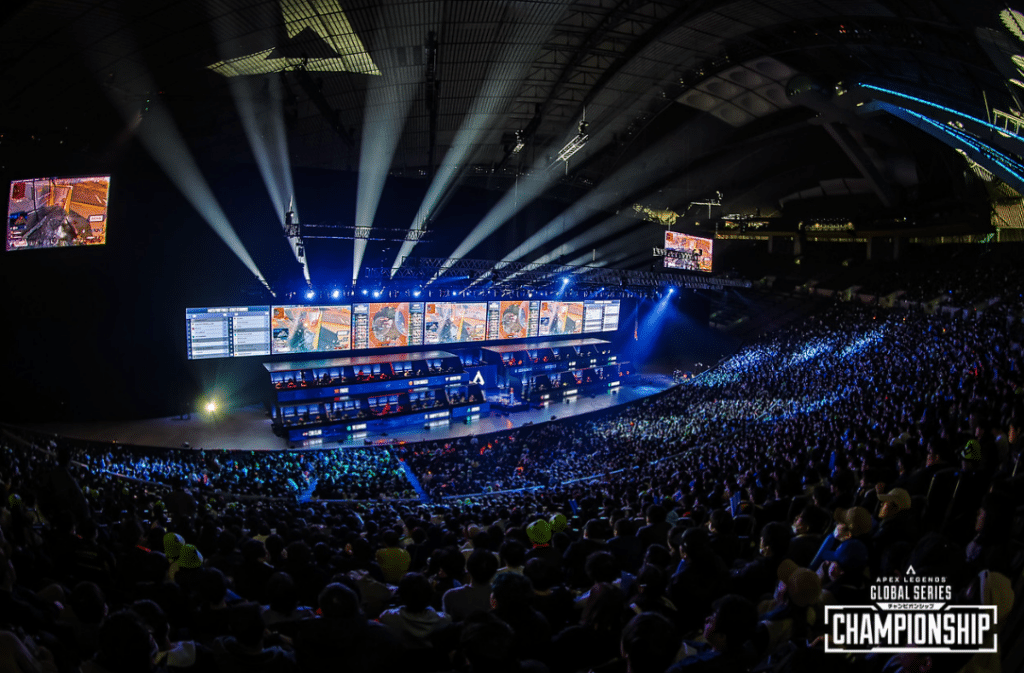
We saw major wins across Apex Legends, EA SPORTS FC, and Madden NFL this year. A stand-out moment for me was the Apex Legends Global Series (ALGS) Year 4 Championship in Sapporo, Japan. More than 30,000 fans packed the Daiwa House PREMIST DOME, setting the record as the biggest ALGS event in history and third largest esports tournament in Japan. It wasn’t just the scale that made it special; it was the connection.
By blending Apex Legends fandom with local culture — from ice sculptures at the Snow Festival to airport takeovers and a performance by Japanese icon SiM — we created an experience that felt authentic to both the local community and our fans around the world. We’re looking forward to bringing the competition back to the city in 2026 and 2027.
Daniel Ringland, Head of VALORANT Esports EMEA, Riot Games EMEA
Our team is very proud of how we stepped up the amount of content we provided viewers during the VCT EMEA season this year. We made a concerted effort to increase the amount of stories we told and succeeded here with in-depth content around the teams and players, alongside more ‘fun’ content that added variety and further personality to the identity of the league.
Akshat Rathee, Co-Founder and Managing Director, NODWIN Gaming
For us at NODWIN Gaming, scaling the PUBG Mobile Global Open (PMGO) was a defining achievement. It reinforced that Indian-origin organisations can execute truly global esports IPs at scale, with world-class production, competitive integrity, and international participation.
What Was Your Biggest Challenge in 2025?
Daniel Ringland, Head of VALORANT Esports EMEA, Riot Games EMEA
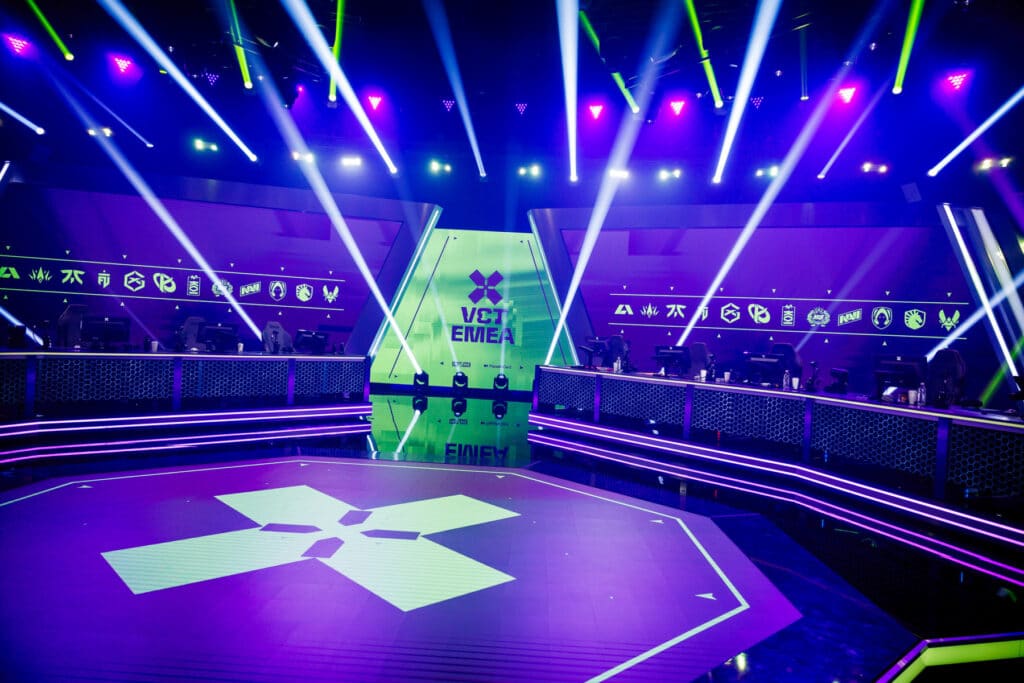
We have always been very responsive to feedback from fans and players, which, as a result, brings added pressure to deliver an exciting sport that everybody can enjoy competing in or watching. Of course, we were extremely disappointed with the tech issues during Stage 1, but we’ve learned from that experience and implemented a whole host of studio and tech upgrades that will prevent this from occurring again in the future. Because of this, we came back even stronger for Stage 2.
We also made improvements to the Pro Player Performance Rooms, which provide players with a more consistent pre-match experience, and launched the VCT EMEA Pro Player Council. This initiative enables our players to provide valuable feedback to the league’s leadership through a structured platform.
Akshat Rathee, Co-Founder and Managing Director, NODWIN Gaming
The biggest challenge was the Freaks 4U Gaming write-off, which was largely a result of timing and the broader slowdown across European markets. It was a reminder that macroeconomic cycles impact esports just like any other industry, especially in regions facing funding pressure and reduced discretionary spending.
Sebastian Weishaar, President of Esports, ESL FACEIT Group
Our biggest challenge in 2025 was internal: managing the required strategic realignment to ensure EFG remained fit for purpose as the market leader in esports. Having tripled in size over the past three years, we had a critical responsibility to reduce complexity and ensure long-term sustainability.
This demanded structural changes to align with the new, more disciplined investment environment, which has ultimately made us stronger, more focused, and well set up to be self-sustainable in 2026 and beyond.
Ray Ng, Head of Esports Ecosystem, MOONTON Games
One of our biggest challenges in 2025 was balancing rapid global expansion while ensuring that our emerging markets had robust, sustainable ecosystems. As MLBB continues to expand beyond our stronghold markets into regions like Eastern Europe and Central Asia (EECA) and the Middle East, we had to ensure that the foundations were in place for local talent to grow with the game.
We adopted a bottom-up approach wherein we focus on grassroots communities, local partnerships, and accessible competitive pathways, which were proven effective in nurturing engaged player bases and self-sustaining ecosystems. In turn, this required us to expand our internal capabilities and talent pool to capture new opportunities and support long-term growth across these regions.
Monica Dinsmore, Head of Esports, EA
Our biggest challenge in 2025 was navigating expansion in new markets while also experimenting with new formats. This year, we made a deliberate choice to prioritise access over exclusivity, doubling down on formats that allow anyone, anywhere to compete.
We launched massive open-bracket tournaments in the EA SPORTS FC Pro Last Chance Qualifiers and the ALGS Open, and we supported grassroots initiatives like the EA SPORTS College Football DreamHack Challenge in Atlanta. While large-scale competitions like these aren’t easy to execute, we’re committed to ensuring that ‘more esports’ doesn’t just mean more tournaments, but more access to competitive opportunities across all levels of play.
Faisal bin Homran, Chief Product Officer, Esports World Cup Foundation
Our challenge was our biggest opportunity: coordinating global calendars, publisher priorities, and competitive formats in real-time. Multi-title events do not offer the luxury of a single ruleset or a single fan rhythm, and adjustments must be made while live. The fact that we balanced broadcast needs, venue demands, player schedules, global media coverage and gameplay integrity simultaneously is what makes the outcome especially meaningful.
What Was Esports’ Crowning Moment in 2025?
Jeffrey Chau, Global Head of Esports, Razer
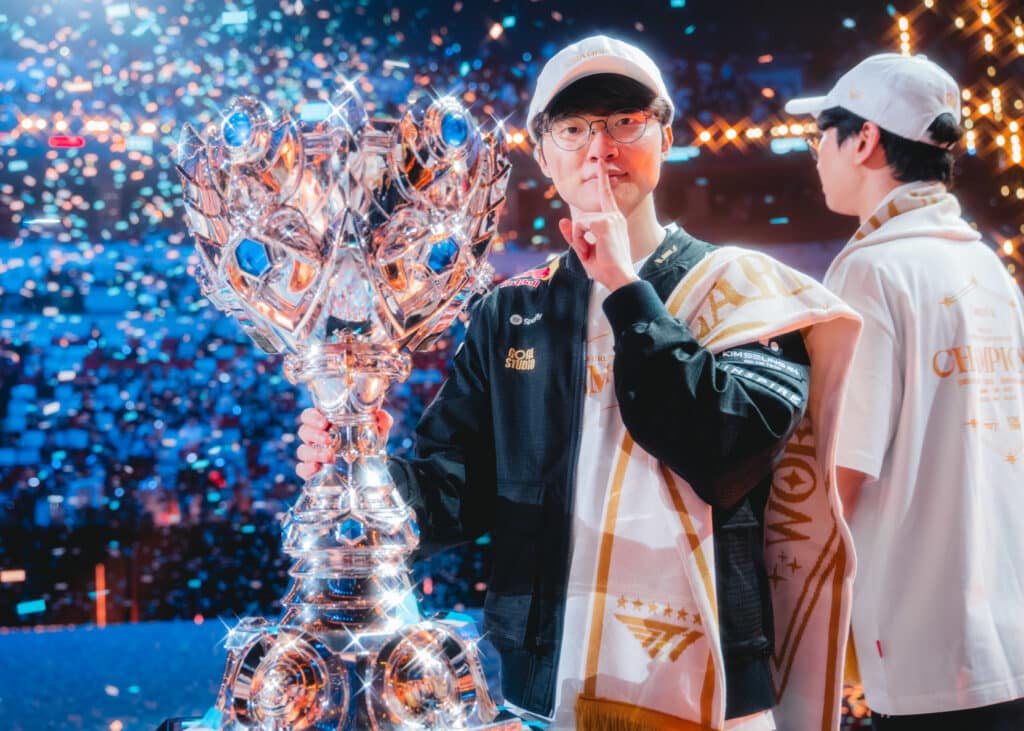
Faker winning his sixth World Championship — the first three-peat in history — and doing it on Razer gear was the defining moment. It wasn’t just a competitive milestone. It was a narrative milestone: longevity, excellence, and the proof that pro hardware matters at the highest levels.
And Razer was fully ready for it! We planned months in advance, working closely with our teams across the globe to ensure fans could celebrate this historic win with us.
Grant Rousseau, COO, Ninjas in Pyjamas
There were a few. You could point to EWC finishing its first full cycle, or the Honor of Kings finals drawing a record crowd. But the crowning moment probably still goes to the League of Legends World Championship Final — a sold-out Chengdu stadium, an incredibly close series, and the inevitability of Faker lifting another trophy. It summed up the best of what esports can be globally.
Alban Dechelotte, CEO, G2 Esports
The viewership. We had record-breaking viewership across multiple tournaments and finals like the League of Legends World Finals in Chengdu, proving that esports is stronger than ever. Our audience is still growing significantly, and we continue to break records with the number of viewers and hours watched.
Vas Roberts, Co-CEO, Team Vitality
In my view, maybe a little biased, but Team Vitality winning our second CS Major in Austin. You had a European team facing an Asian team in a Major grand final hosted in the United States – three continents represented on one of the biggest stages of the year. It was an incredible example of Counter-Strike’s global appeal and the growing interest in competitive gaming worldwide.
Artyom Odintsov, Co-Founder and CEO, Esports Charts
For me, it was the StarLadder Budapest Major 2025 and the return of StarLadder to the big Counter-Strike stage after six years. The energy of the crowd, the intensity of the matches, and the overall atmosphere made it one of the most memorable CS events of the last few years.
From a data perspective, the event was impressive: strong live viewership, high co-stream engagement, and broad international interest. The StarLadder Budapest Major finished the year within the top 10 PC and console esports events by Peak Viewers, while also ranking among the leading esports events — including mobile titles — by Hours Watched in 2025.
Sebastian Weishaar, President of Esports, ESL FACEIT Group
Esports’ crowning moment was the combined success of two competitive pillars: the resurgence of the Counter-Strike 2 ecosystem and the scale of the Esports World Cup (EWC). For CS2, we saw a massive 25% growth in hours watched and three separate events, including IEM Melbourne for the first time, surpassed 1m concurrent viewers.
Simultaneously, the EWC showcased the ability to bring the world’s best players across the biggest games together over seven weeks, generating record-breaking viewership and a spectacle that players, fans and publishers want to be a part of.
Which Esports Scene Impressed You The Most in 2025?
Vas Roberts, Co-CEO, Team Vitality
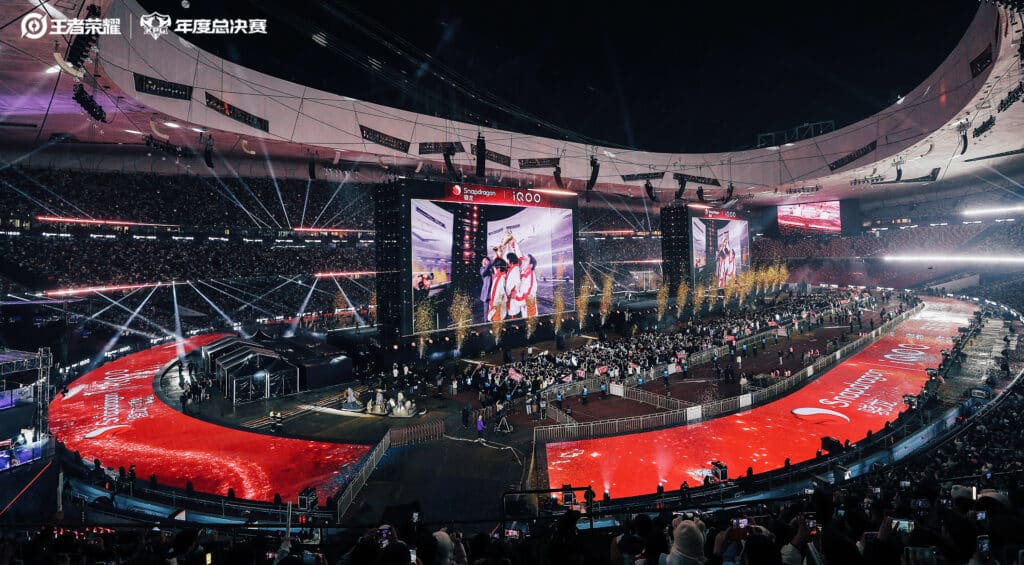
The esports scene that impressed me the most in 2025 was Honor of Kings (HOK). It would be easy to point to the usual powerhouses like CS2 or League of Legends, but HOK truly showed the potential of mobile esports on a global level.
While it may not carry the same weight in the Western world, mobile esports continues to grow, and the sheer scale of mobile gaming is impossible to ignore. The King Pro League Grand Finals saw a Guinness World Record-breaking crowd of 62,000 at China’s Bird Nest Stadium, selling out in 12 seconds. That level of demand is extraordinary by any entertainment standard.
Akshat Rathee, Co-Founder and Managing Director, NODWIN Gaming
Honor of Kings stood out the most. It demonstrated how a single-country, single-title ecosystem can be massively sustainable, profitable, and culturally embedded. The scale of fandom, strong female participation, and sold-out live events reminded me a lot of the IPL (Indian Premier League) model, deeply local, fiercely loyal, and independent of international stars.
The second best honorable nominee is EAFC. EAFC has made a great transition from FIFA to EAFC for the community, tournaments, viewership, fans and in-game engagements.
Faisal bin Homran, Chief Product Officer, Esports World Cup Foundation
Mobile is the ecosystem that behaves like the future: accessible, steep growth curves, and deeply community-driven. Southeast Asia, India, LATAM; their fans show up, travel and watch. Mobile titles aren’t just ’emerging’ anymore; they’re driving the centre of the competitive calendar. Publishers in that space are bold enough to evolve formats, and that courage is what pushes the industry forward.
Robbie Douek, CEO, BLAST
I’d highlight Asia, particularly Singapore, Hong Kong and mainland China — where the appetite for premium esports entertainment has accelerated rapidly. Our first events in Hong Kong and Chengdu were genuine milestones, and the passion across the region is extraordinary. There’s a clarity of vision from cities, fans and local partners that makes Asia one of the most exciting growth territories in the world for esports.
Daniel Ringland, Head of VALORANT Esports EMEA, Riot Games EMEA
Game Changers continues to impress me every single year. The circuit has been embraced by every corner of the world, with Seoul seeing fans from all over the globe visit for this year’s Game Changers Championship.
In EMEA, we have been to Istanbul for the final game of the year for our region for the past two years, the Stage 3 Finals, to sold-out crowds who show such a strong passion and love for this important initiative. We have rapidly seen more and more women competing in the circuit and are looking forward to building upon the success of Game Changers even further in 2026.
Adam Rosen, Founder and CEO, Rally Cry
We have a front row seat to see the excitement around collegiate esports grow. We saw expanded participation, new competitive opportunities, and competitive experiences that brought esports into campus life through both online and LAN events.
At Rally Cry, we were thrilled to offer qualifiers and tournaments in games like Counter-Strike 2, League of Legends, Rocket League, Madden, and FGC titles, giving players real competitive opportunities beyond traditional varsity leagues.
Which Esports Scene Impressed You the Least in 2025?
Akshat Rathee, Co-Founder and Managing Director, NODWIN Gaming
Call of Duty feels like a missed opportunity. Despite its legacy and scale, the franchise continues to struggle with clarity around esports investment. The after-effects of the Overwatch League model and the prolonged transition following Microsoft’s acquisition of Activision Blizzard have left the ecosystem directionally uncertain, both at the PC and mobile levels.
Artyom Odintsov, Co-Founder and CEO, Esports Charts
NA esports — particularly the regional events. While we observed significant growth in SEA, South Asia, and MENA, the North American leagues largely stagnated, showing only minimal growth or, in some cases, decline. This region, once a key driver for esports before 2020, didn’t show major positive changes in 2025.
Sebastian Weishaar, President of Esports, ESL FACEIT Group
Rather than singling out a specific scene, the area that impressed me the least was the collective lack of consistent investment in developing robust Tier 2 and Tier 3 ecosystems across the board. While many games do well at the top level, creating consistent, scalable, and rewarding pathways for emerging talent remains a major, unresolved challenge for the industry.
Ray Ng, Head of Esports Ecosystem, MOONTON Games
I wouldn’t describe any scene as ‘least impressive’. Instead, what I’d say is there are areas for improvement for us to continue advancing the esports scene. And that’s what we’ve continued to do in 2025. We’ve stepped up our support for emerging markets by working to build the right infrastructure, nurturing local talent, and creating sustainable pathways for growth.
Our first tournament in Egypt for MLBB Professional League (MPL) Middle East and North Africa (MENA) was a great example of this in action.
The post A Year of Hope: Esports stakeholders review the industry in 2025 appeared first on Esports Insider.