The 2025 League of Legends season was one of Riot Games’ most ambitious attempts to redefine and refresh the game’s structure.

With seasonal narratives that shape how the map and gameplay look, this year’s overhaul sought to create a more cohesive experience while still giving longtime players something fresh to dive into.
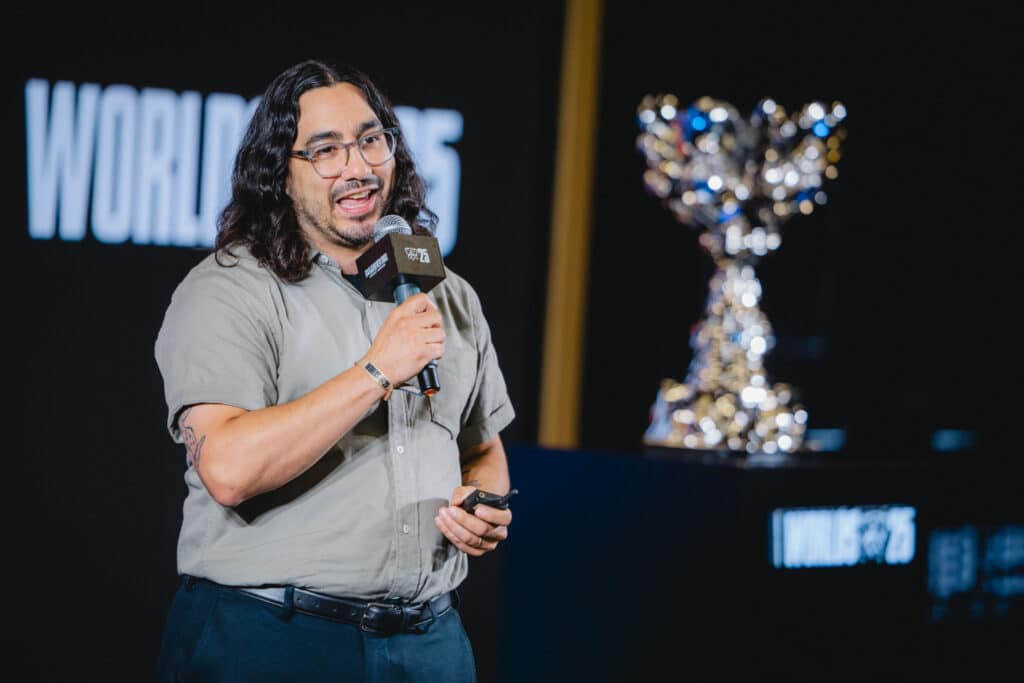
“This season has been a huge experiment for us. We wanted to see how far we could push cohesion, variety, and long-term storytelling without overwhelming players,” said Paul Bellezza, Executive Producer of League of Legends, in an interview with Esports Insider,
- League of Legends Zaahen: All abilities explained
- Riot bids farewell to the LTA as LCS and CBLOL return in 2026
- WASD movement in League of Legends? A small change with big implications
At the 2025 League of Legends World Championship. Bellezzza sat down with Esports Insider to discuss the game’s lengthy production timelines, the lessons learned from early community feedback, and how the team balances the needs of all players.
He also highlighted the challenges of introducing new mechanics in future seasons and Riot’s broader goal of making League more approachable for the next generation of players.
Paul Bellezza: It’s been very interesting. It’s experimental. This is a big production, these things take a long time to do, and as you probably saw, there’s a lot of weaving in each season with each other. The type of content related to what’s happening that season. It’s a lot of effort and a lot of things to do.
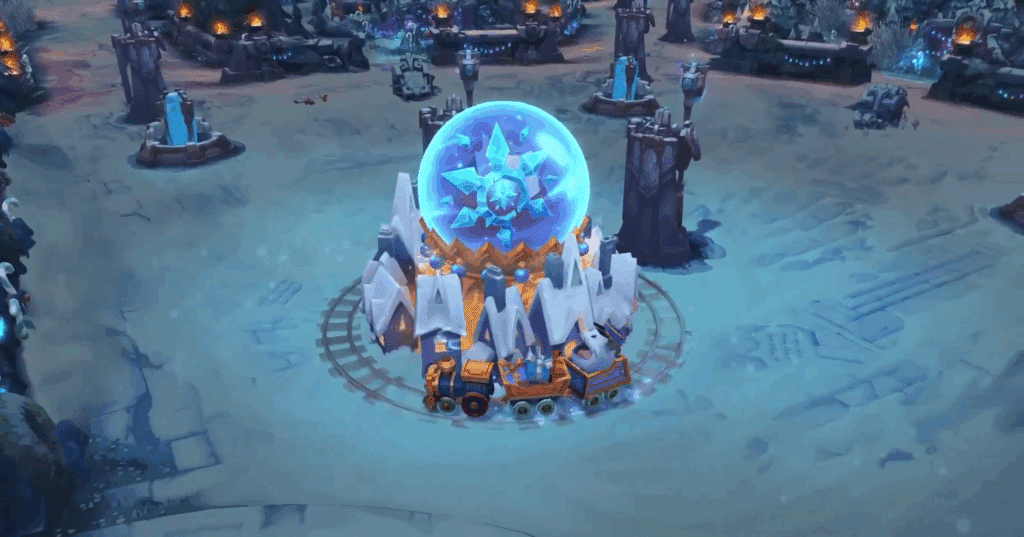
On the one hand, players responded really well to just how tight and cohesive that was and saw the attention to detail. That was a good learning, that details are appreciated, but there’s also ‘what is too much’. So, for example, we got a lot of feedback from the Noxus map to be like ‘hey, by month two, people are like (bored) of this, of the red and the brown vibes.’ It is not as festive as it usually is, and so it could be too much hanging out with intense feelings. So that’s why I’m glad we were able to have the Spirit Blossom map and then eventually, I remember when we told players we were bringing back normal Summoner’s Rift, and they’re like, ‘where’s the update?’ And then we shared that the Winter map was coming (back). That was a fun thing.
So I think variety is important. We’ll have to find the right balance of how long we keep something on for or switch it? And this is true around skins in particular. A lot of players were like ‘but I want this skin line or that skin line and I’m not going to get the seasoned skin line.’ So really it’s learning the balance, but I think overall it was a worthy experiment.
ESI: What is the timeline of a production of this scale? So in the sense of creating a story at the beginning of the year to how it ends.
Bellezza: Over a year and longer to do it. So everything we knew for this season, we had a draft of it over a year ago. As we make it, we kind of adjust and tweak it as we learn, but it takes a long time to get things set up.
So the positive of that is we have to do a lot of upfront planning. The downside of that is we can’t really react to players because we are committed to what we’re doing. So again, to the learning that you need, if you want flexibility, then you need a little more wiggle room. (…) We are absolutely working on all of 2026 and the beginning and beyond 2027.
ESI: So for 2026, what are the learnings that you are implementing actively? Specifically technicalities that you think didn’t really work in 2025, so you will not do it in 2026.
Bellezza: I think you heard some of the gameplay changes on Summoner’s Rift, and so there were some big swings that we made this year, which some players love, but some other players absolutely got frustrated with.
So I think building up on what Matthew Leung-Harrison (Lead Gameplay Designer for League of Legends) said yesterday, it’s really leading into existing systems and finding the depth within versus opposite additions make the quality of life of just the core, the Rift experience better, where it makes sense. That’s where we’re kind of focusing our efforts, and I think there are plenty of players that will welcome that.
I think there will also be players who expect way more, but I think this year we’re going to try to find that right balance with what we have instead of changing everything, but as always we’ll pay attention to that as the year goes.
So that’s one, and then you said technicality? It makes me think of engine work. We’re going to continue to do engine work and tooling work that makes it easier for us to prototype and make seasonal map theming and modes. We’ve done a lot of work with modes there. You’ve seen ARAM Mayhem, and that we put augments there, and so the focus is on what we can do with that.
ESI: How difficult is it to balance a game where you have to think of so many people who have different game experiences? So for example, people who love skins, people who love esports, and then people who are very into the game because they’re pro players/ But then there are also the players that don’t really know the game.
Bellezza: First of all, League is a game. So we need to make sure the game is fun and quality, and I think those who love lore and skins come secondary to the game. They love that stuff because they like the game or what the game offers. So that always needs to be incredibly awesome and appealing and compelling.
So balancing what you do for the existing very passionate audience while going ‘hey, what can you make approachable for a new audience’ is really difficult. You don’t want to, for lack of a better term, lower the ceiling of what the MOBA experience is, but instead, you might want to raise the floor up so you can still get to those heights. We provide pathways to make it easier.
So adding WASD is an example of us going ‘hey, maybe you didn’t grow up with a mouse and keyboard because you didn’t have access to that. Now that you do have access to a pc, this should be a bit more understandable for you.’ Not saying we’re changing the depth of the game, but we’re making it a bit easier for you to learn. You might not have been able to try it otherwise.
And I think there’s still so much that we can be doing. How can we get people to know what the mechanics are? You learn League of Legends like ‘good luck.’ Champions, items, lanes, ruins. So how can we use other types of modes to get you there? That’s why Brawl is an important step. Look, you just fight. You just fight, and you don’t have to worry about objectives and towers. And so I think things like that kind of help provide pathways.
We’re looking at everything altogether. How do we again raise the floor by giving different pathways? But it’s still very much the competitive movement that can be social with your friends. So it’s a balance. It’s hard. It’s a really hard challenge in games.
ESI: Is this a topic that comes up often during meetings? Catering to more than just the players, like us, who have been playing the game forever?
Bellezza: Every day. It’s absolutely every day that we go through the mission. We want to make it better to be a player. We’re the most player-focused video game company on the planet. That’s our aspiration.
Then you have to cater not just to players like me and you, but think about what the new generation needs, it leads to really deep discussions about what are the new pathways. Where should we revamp? Where should we simplify things out of the game? If you look at our progression system, do you have a lot? So how do you make that more knowable? We have really good debates about what we should commit to and what we should tweak. And so that is an active conversation happening every day.
And I mean to be honest, it’s exciting just as a human. As I said yesterday, I want this to be a multigenerational game. When I’m 65 and I’m still playing League, what’s a 20-year-old league player going to need? What’s their life? You have to look at everything in totality of how you’re living as a human or even when you and I were starting playing league back then, right? Social media was different; the way you learn on the internet was different. So what’s that next step?
That’s the type of stuff we’re thinking about, like what needs to be true for people who love this game forever? And that is a constant understanding of what human beings are doing, what they need that’s different from what you, it’s fascinating stuff.
ESI: Is there a mechanic for a champion you’d like to implement, but you keep thinking maybe this isn’t the right time? Maybe it would be too difficult for us and for the players.
Bellezza: I don’t think anything is particularly difficult to implement because of what we can do; it’s more about the idea. We can find a technical solution to achieve the idea. But what is the right idea? And it comes down to the audience, our players.
When we’re making this champion, is it for players who are still learning? Is it for a player who has 500 hours or 1000 hours of League, or are they a 10,000-hour player? And the needs of those can be different.
I was talking to some players about just the state of the game. “I feel like you guys can go even deeper with how you’re changing things,” some said.
And we could do that for them because they are playing the game every day, a lot at 10 hours a day, that’s probably not exact, but a good amount of hours. If you’re talking to someone who’s like, “I still play League five to 10 hours, I’m coming to play my Summoner’s Rift at night,” and they haven’t played for a few months, they might go “what is this new mechanic who is a champion?”
There’s that tension between the groups, and so to me it’s really about figuring out what’s the right thing at the right moment.
So I didn’t really answer your question about what would be a mechanic… I’ll just say this for fun: mounts. What would that look like? We have Rell, who has one, but what would it be like to have more of that type of stuff in the game? Maybe that’s a gamemode in the future. This is me just having fun, I have no idea if that would be possible, nor is this in the works. But I think there’s something to do with different types of speed and play and what that would do, the dynamic, but again, not a technical challenge, but a very big production challenge.
ESI: I think you’re being influenced by ideas for the MMO ideas…
Bellezza: I mean something I like is when you play Corporate Mundo and you’re in a little car —there’s something really fun about that moment. So how do we bring that little piece of joy to gameplay from here and there? And maybe it’s just that, but I really feel like there’s a lot of moments of delight like that in the game.
ESI: What is something about your team and your work that you would like fans to know or keep in mind when being introduced to new features?
Bellezza: That we deeply mean it when we say we want to be player-focused. We have a very, very amazing research, insights team who do complex and longitudinal studies where we can study people playing the game over two to three months and go “what are they learning?” We go deep on these understandings.
We take the time to be really thorough and thoughtful, and what that means to players is that we are trading things off all the time for what’s the right answer. And oftentimes sometimes there is, sometimes there’s not.
You just have to try things. I think if you go to WASD, for example, there’s a lot of debate about what we should do from the community side. And I think what helped us was Swarm testing the waters with that feature. Then some labs and then some breakthroughs in tech and design to go ‘hey, we can actually make this work without breaking the camera,’ and that type of research to kind of give us confidence to then eventually get to the PBE. We are very deliberate with getting player feedback before things get to PBE. We’ve already done three to four months of research before it even hits there.
The post League of Legends Executive Producer discusses Season challenges, the new generation of players, and 2026 lessons appeared first on Esports Insider.